|
$$PLAIN_TEXT_PREVIEW$$
British War Art: Nevinson and Nash
|
|
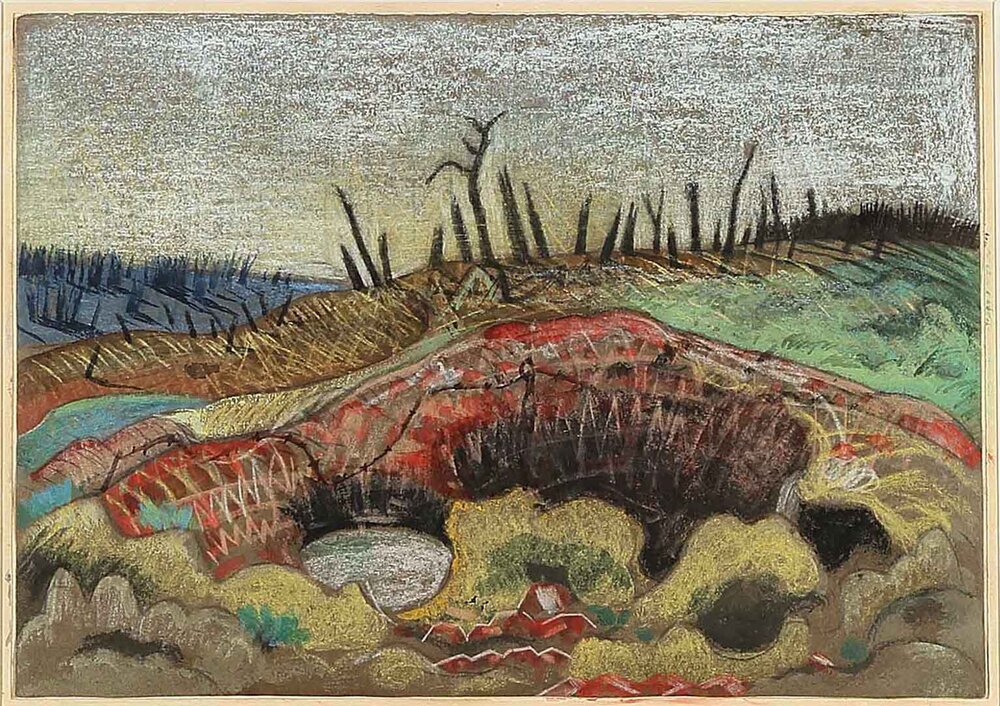
Paul Nash, A Farm Wytschaete, 1917. Ink, chalk, and watercolor on paper,
10 1/8 x 14 1/8” (25.7 x 35.9 cm)
|
|
This week, we are happy to share with you a group of works by Christopher Richard Wynne Nevinson (1889–1946) and Paul Nash (1889–1946). The two men were friends, exact contemporaries, and classmates at London’s legendary Slade School of Fine Art. Both witnessed the so-called “Great War” firsthand and were appointed “official war artists” by Britain’s Department of Information in 1917.
|
|
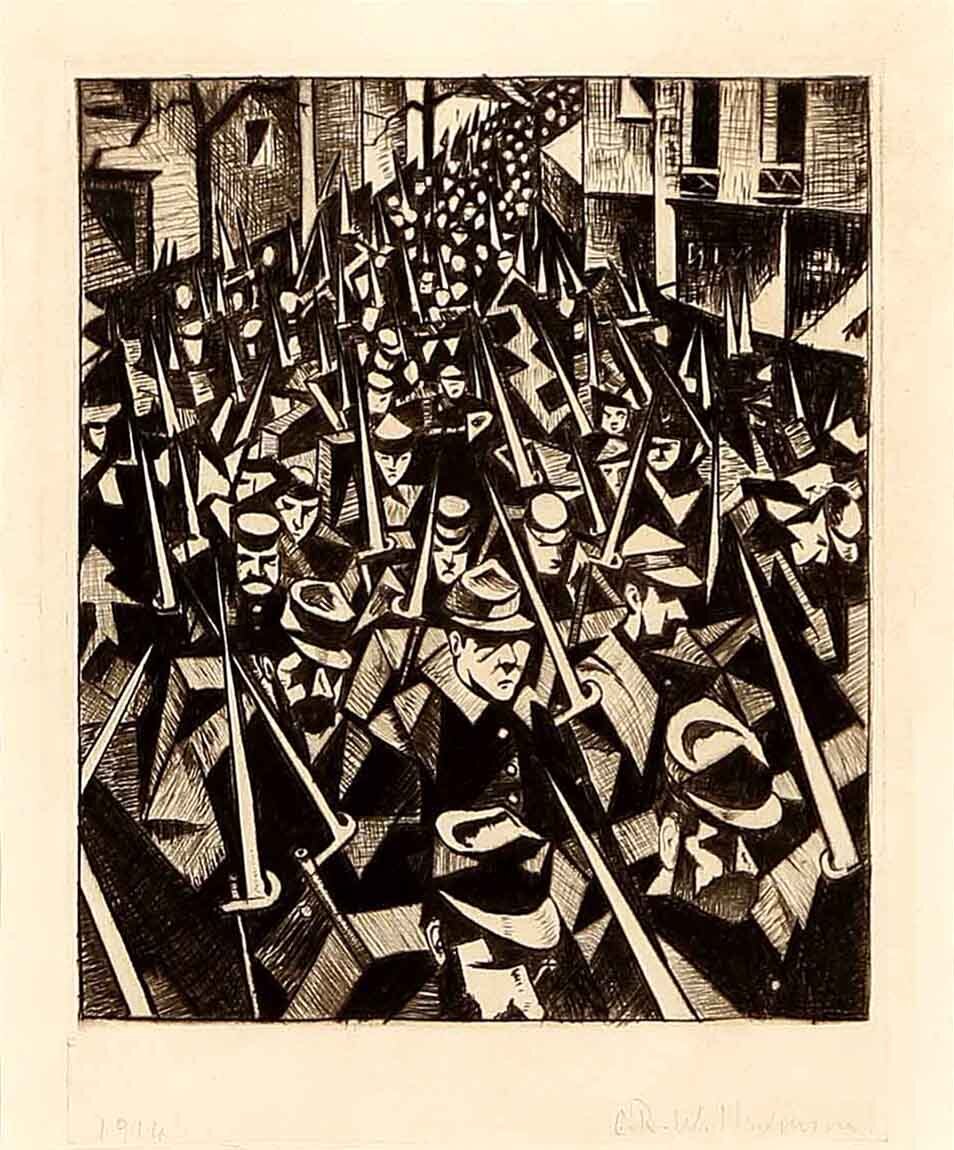
Christopher Richard Wynne Nevinson, A Dawn 1914, 1916.
Drypoint, 8 1/4 x 7” (20.9 x 17.8 cm)
|
|
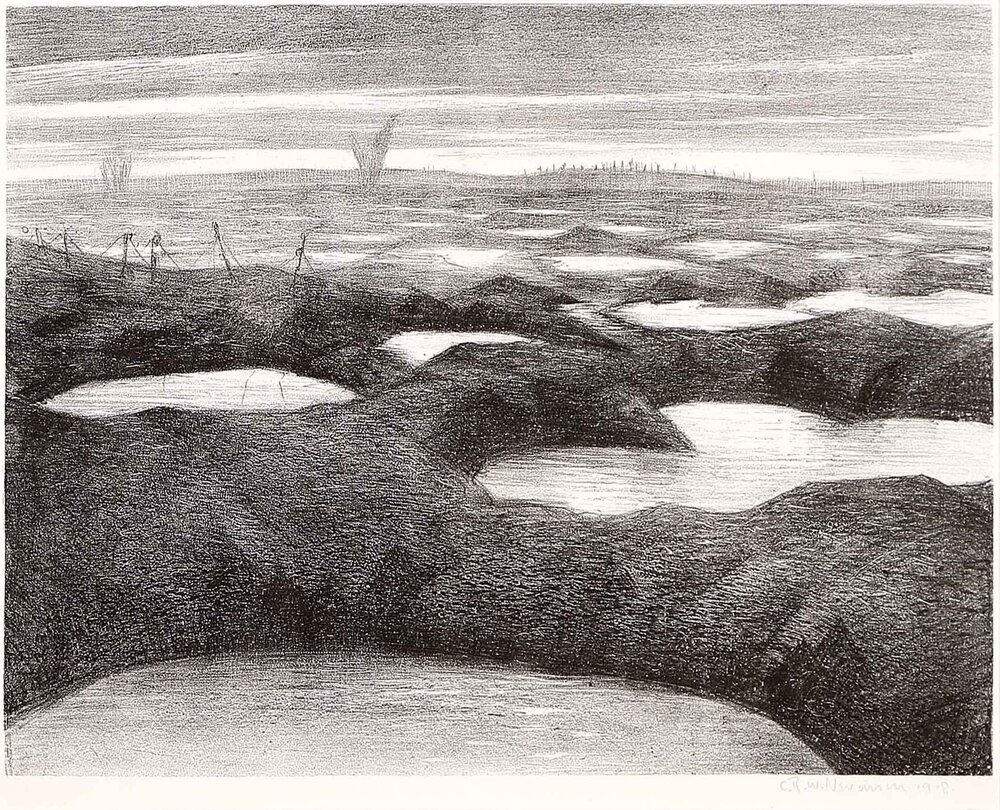
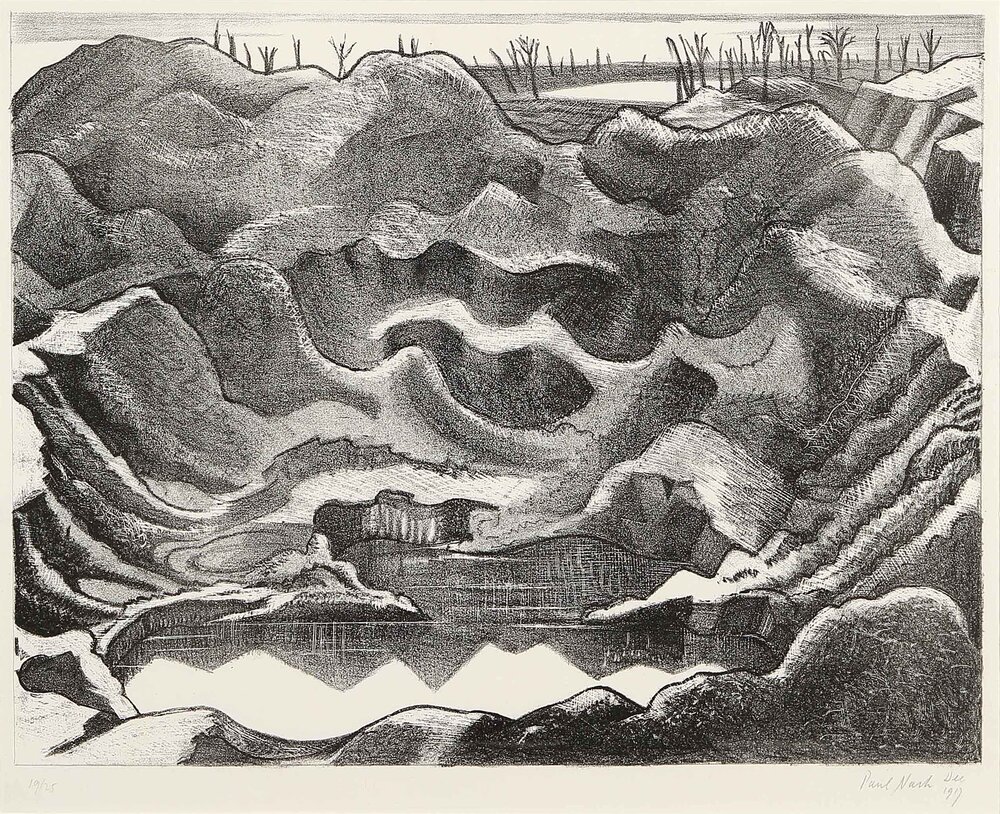
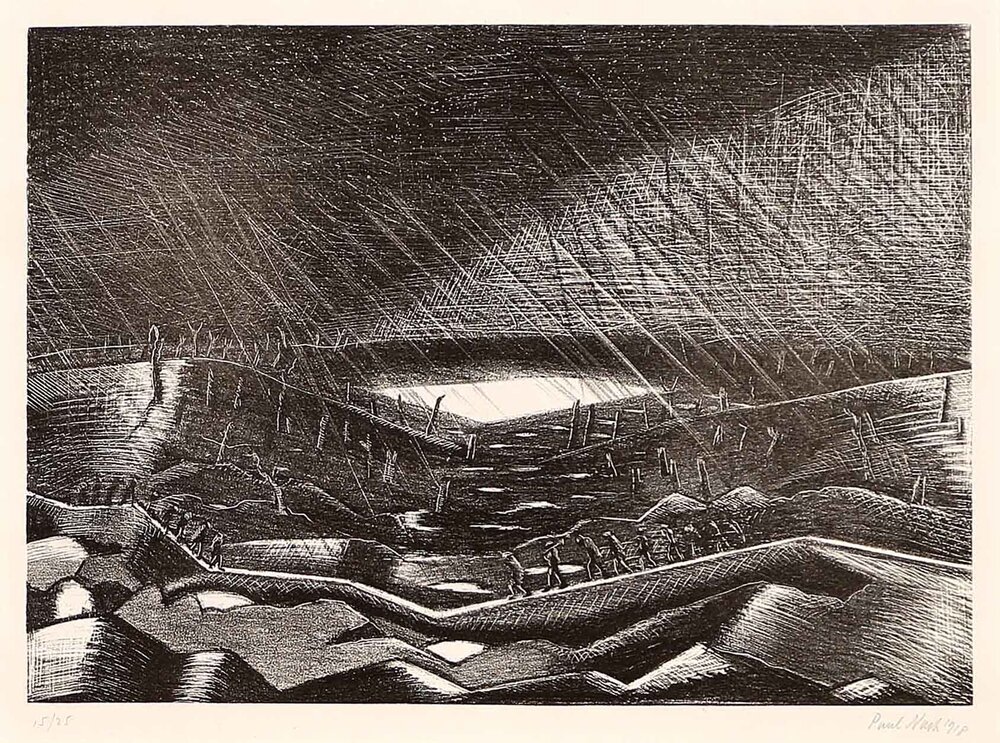
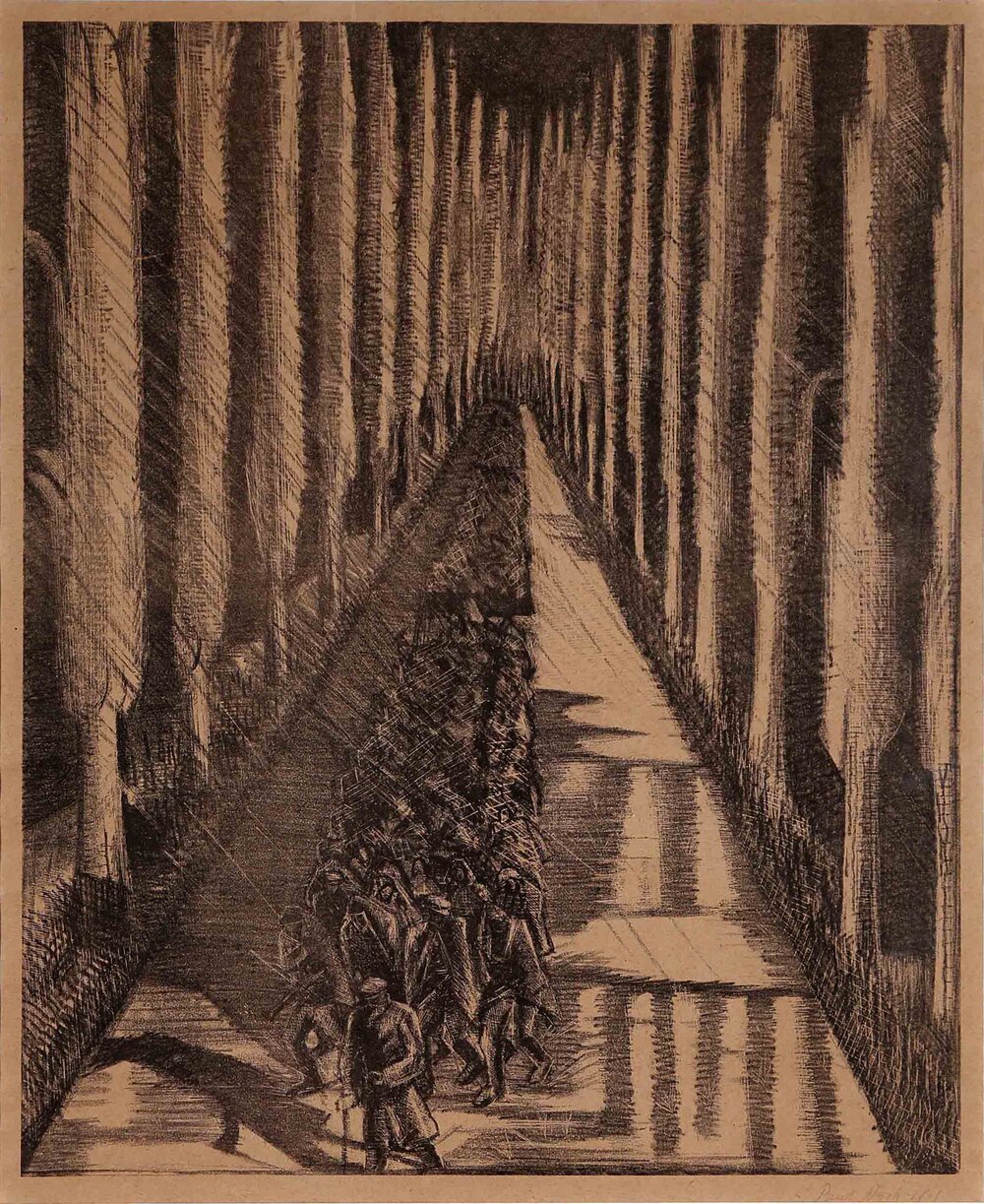
Schooled in the lessons of modernism—from Futurism to Abstraction—both artists sought to convey the unprecedented nature of modern warfare through distinctly modern means. Nevinson, considered an iconic artist of the First World War, tended to focus on the human figure and troops arranged in rhythmic ensembles. Nash, by contrast, focused on the gashed and pitted landscape—particularly as witnessed on the Western Front in Belgium—to deeply moving effect.
|
|
Christopher Richard Wynne Nevinson, After a Push, 1918.
Lithograph, 13 1/4 x 17” (33.5 x 43.5 cm)
|
|
The work of these artists, like that of their remarkable contemporaries David Bomberg (1890–1957) and Edward Wadsworth (1889–1949), offers a culturally, temporally, and geographically specific perspective on the broader themes of war and turmoil in the twentieth century that undergird my collection.
|
|
Paul Nash, Mine Crater (Hill 60), Ypres Salient, 1917.
Lithograph, 14 1/8 x 18" (35.7 x 45.7 cm)
|
|
Paul Nash, Rain, Lake Zillibeke, Belgium, 1918.
Lithograph, 13 3/8 x 16 3/4” (34 x 42.8 cm)
|
|
Paul Nash, Men Marching at Night, 1918.
Lithograph, 20 x 16 1/2” (51.2 x 41.8 cm)
|
|
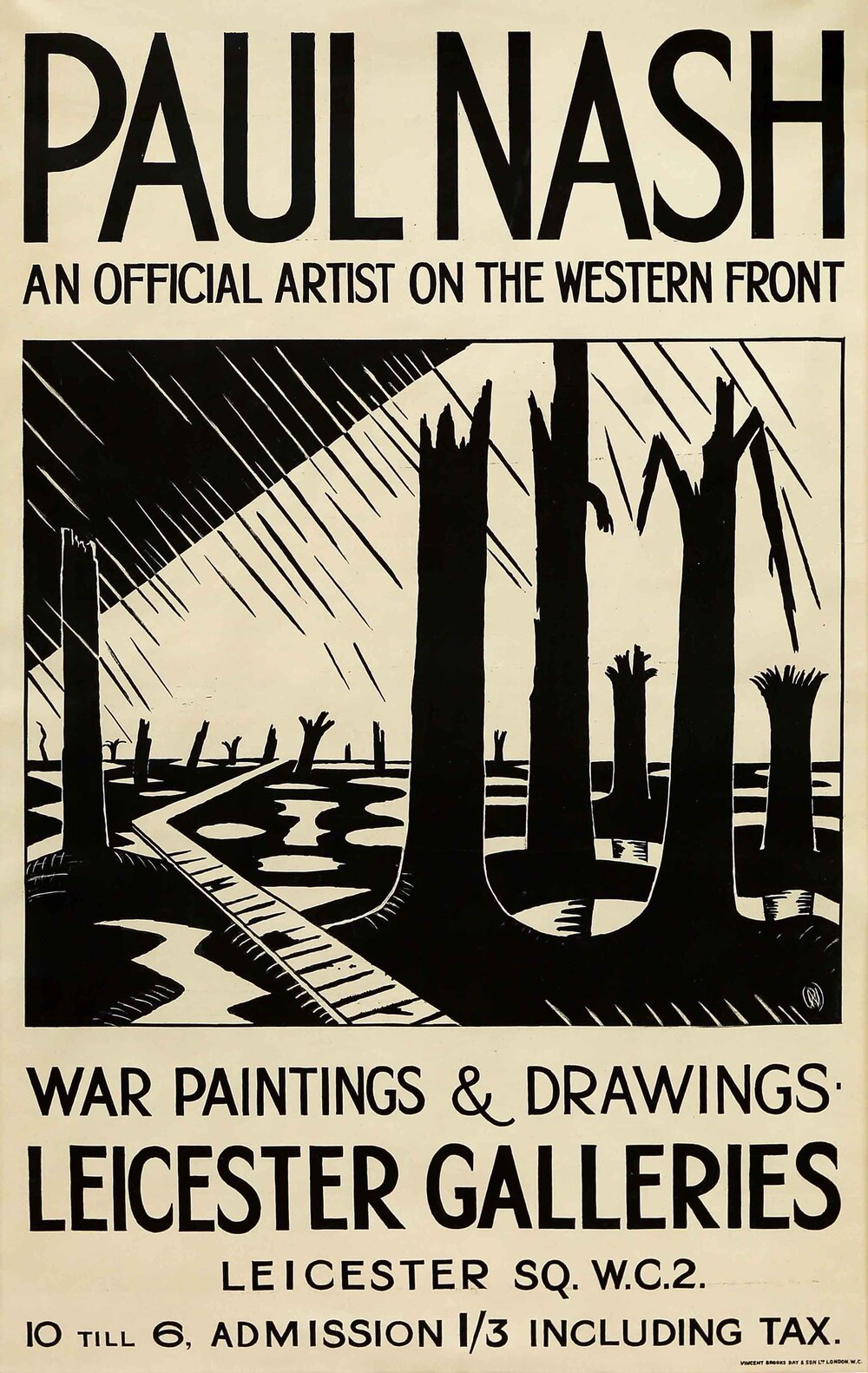
Poster: Paul Nash: An Official Artist on the Western Front, War Paintings and Drawings, Leicester Galleries, 1918.
Work reproduced: Paul Nash, Void of War, 1918.
Lithograph, 29 1/2 x 19” (74.9 x 48.3 cm)
|
|
|
|
|