$$PLAIN_TEXT_PREVIEW$$
Merrill C. Berman Collection
 

Käthe Kollwitz’s “Richter-Mappe” (1920)

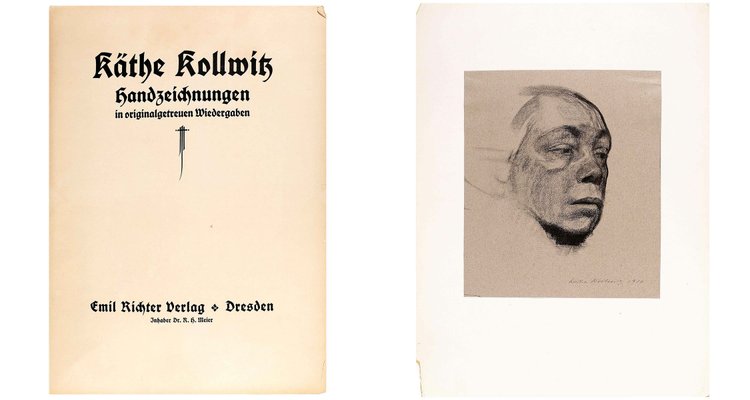
Title Page
Plate 1: Selbstbildnis 1916 (Self-Portrait 1916)

From the print portfolio: Käthe Kollwitz: Handzeichnungen in originalgetreuen Wiedergaben (Drawings in Faithful Reproductions). Edited by Fritz Boettger and with an introduction by Walther Georg Hartmann. Dresden: Emil Richter Verlag, [1920]. Ausgabe “C” (unnumbered). Portfolio cover, colophon, and 24 offset lithographs of varied dimensions mounted on Bristol board, 30 x 23 1/4” (76 x 59 cm)


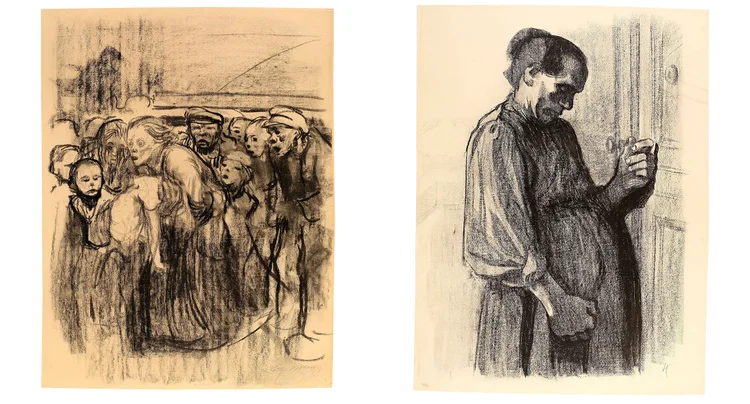
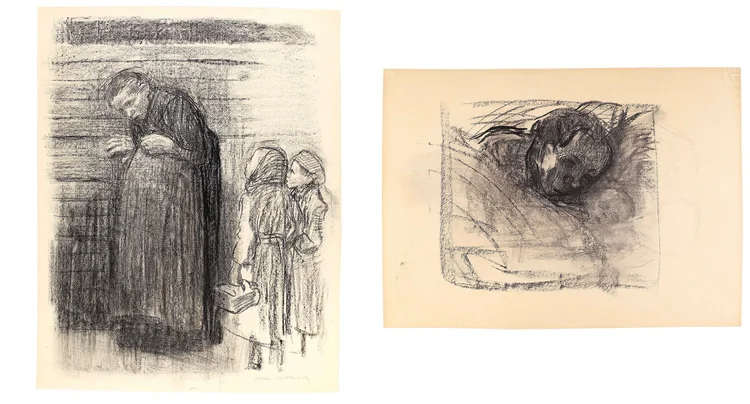
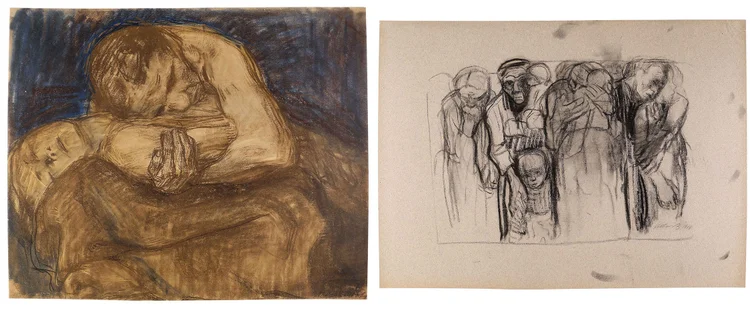
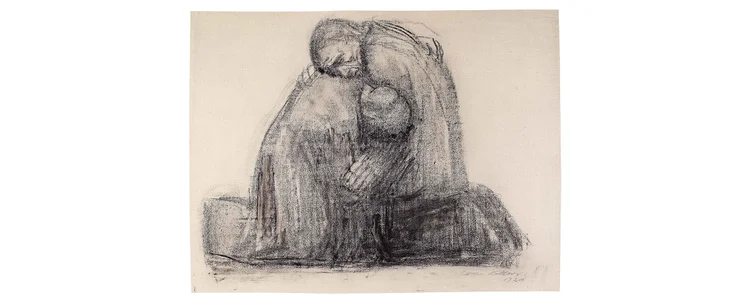
In 1919, Käthe Kollwitz (German, 1867–1945) was the first woman to become a full member of the Prussian Akademie der Künste, an appointment that came with the honorary title “Professor.” The following year, she agreed to publish this large-format portfolio of twenty-four offset lithographic reproductions of drawings she had created over the past two decades. Because of Kollwitz’s role in selecting the works reproduced, this portfolio, published by Emil Richter in Dresden (thus the nickname “Richter-Mappe,” or “Richter Portfolio”), is recognized as a significant document of the fifty-three-year-old artist’s own assessment of her accomplishments to date. Less celebrated, however, are the plates themselves, which tend to be dismissed by print specialists as mere reproductions. Commercial techniques had progressed to such a point in 1920, however, that the detail and verisimilitude of these reproductions is exceptional. For Kollwitz, the potential of commercial reproductive processes to circulate her works to the broader public at an affordable price was paramount.

We are inspired to highlight this portfolio by Starr Figura’s dazzling exhibition Käthe Kollwitz, on view at The Museum of Modern, New York until July 20.


Plate 2: Zeichnung von H. K. (Drawing of H.K.)
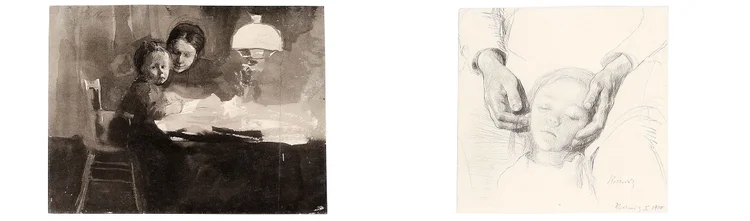
Plate 3: Kinderstudie zu “Zertretene” (Study of a Child for “Downtroden”)

Plate 4: Frauenstudie zu “Zertretene” (Study of a Woman for “Downtroden”)
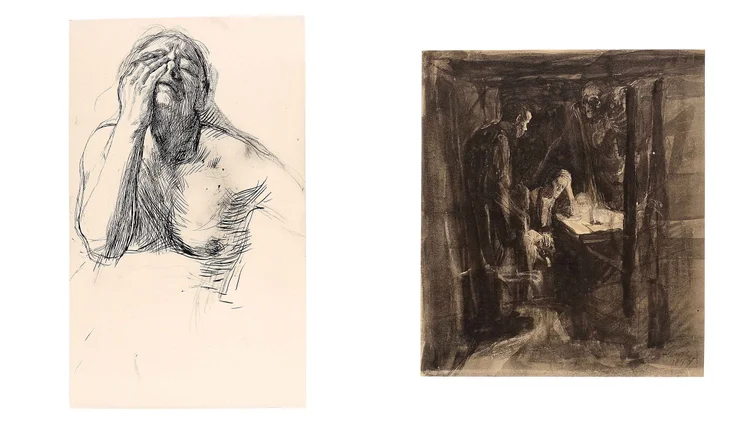
Plate 5: Zeichnung zu Blatt II “Tod” aus dem Weberzyklus (Drawing for sheet II “Death” of Weavers’ Revolt)

Plate 6: Studie zum “Losbruch” Blatt 5 aus dem Bauernkrieg (Study for “Outbreak” Plate 5 of Peasant’s Revolt)
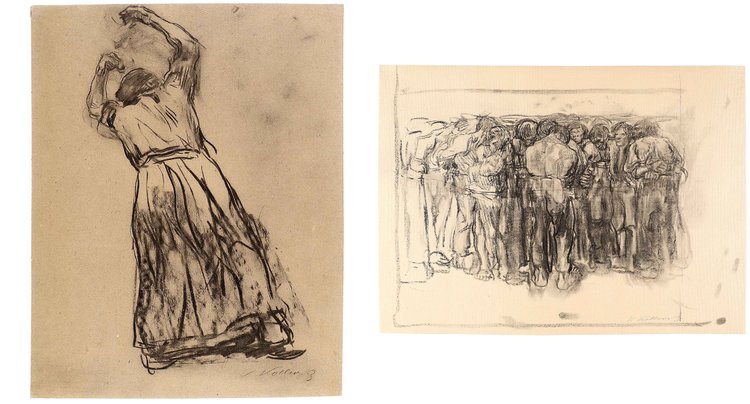
Plate 7: “Gefangene,” Kohlezeichnung zu Blatt 7 aus dem Bauernkrieg (“Prisoners,” Charcoal Drawing for Plate 7 of Peasant’s Revolt)

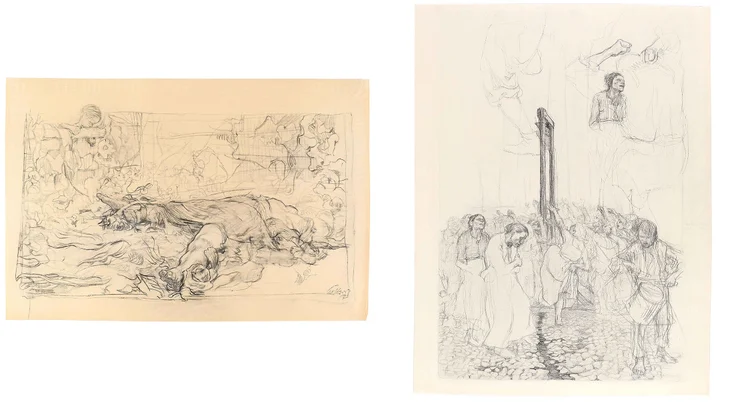
Plate 8: “Vergewaltigt,” Bleifeder zu Blatt 2 aus dem Bauernkrieg (“Raped,” pencil drawing for Plate 2 of Peasant’s Revolt)
Plate 9: Studie zur Carmagnole (Study for Carmagnole)

Plate 10: Abschied (Farewell)
Plate 11: Abschied (überhängender Arm) (Farewell [Overhanging Arm])

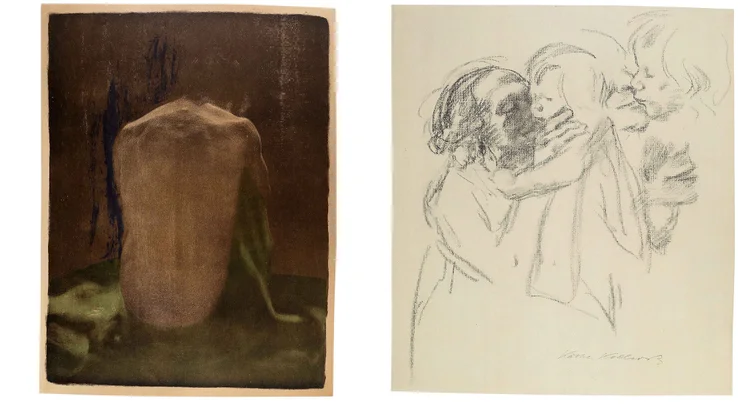
Plate 12: Weiblicher Rückenakt auf grünem Tuch (Female Nude from the Back on Green Cloth)
Plate 13: Frau, Kind liebkosend (Woman Caressing Child)

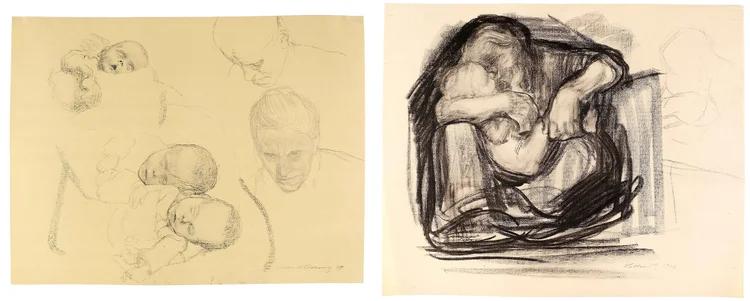
Plate 14: Blatt mit Kinderköpfen (Sheet with Childrens’ Heads)
Plate 15: Kauernde Frau mit Kind im Schoss (Crouching Woman with Child on her Lap)

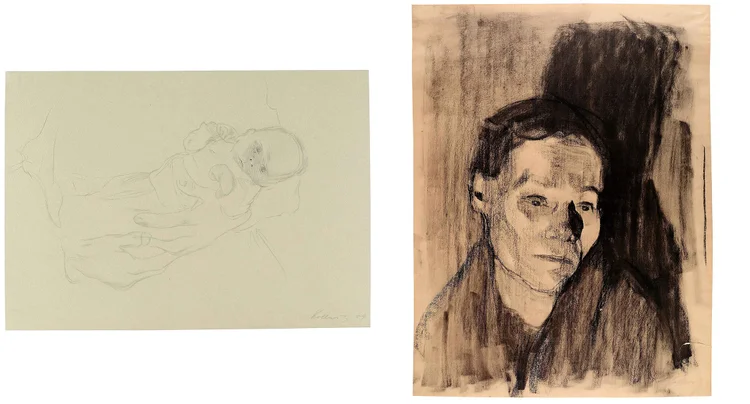
Plate 16: Kleines Kind im Arm gehalten (Small, Cradled Child)
Plate 17: Heimarbeiterin (Home Worker)

Plate 18: Verunglücktes Kind (Child Victim of an Accident)
Plate 19: Zeichnung für den Simplicissimus (Drawing for [the journal] Simplicissimus)

Plate 20: Zeichnung für den Simplicissimus (Drawing for [the journal] Simplicissimus)
Plate 21: Mutter am Bett des toten Kindes (Mother at the Bed of Dead Child)

Plate 22: Farbzeichnung zur “Pietà” (Color Drawing for “Pietà”)
Plate 23: Mütter (Mother)

Plate 24: Eltern (Parents)


May 14, 2024

Merrill C. Berman Collection

instagram email

555 Theodore Fremd Avenue, Suite C203, Rye NY 10580, US

Unsubscribe