|
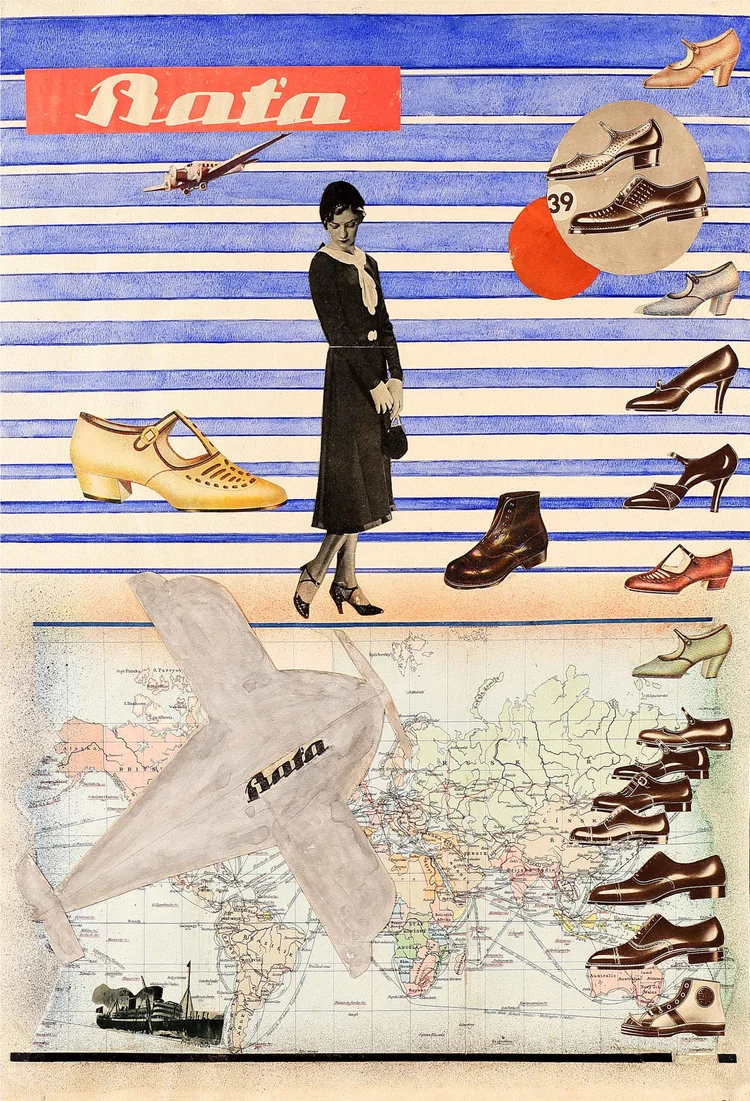
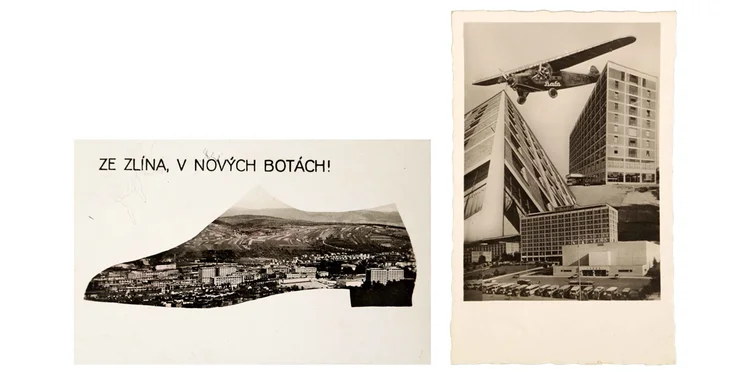
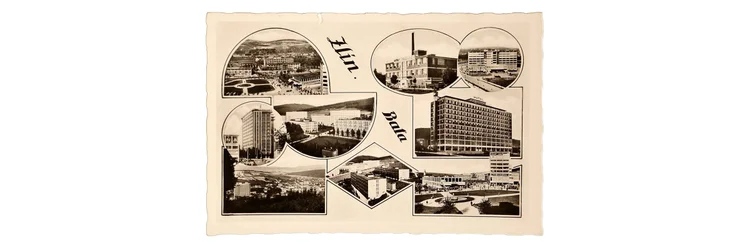
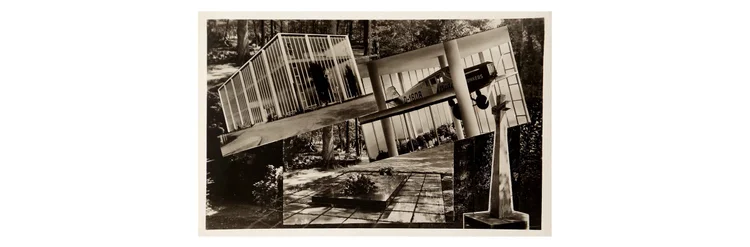
From 1922, Otakar Mrkvička was a member of the Prague-based Devětsil artists’ group. In combining abstract space, signifiers of travel (the map, the plane, the boat, the car), and cut-and-pasted ready-made imagery (the figure, the shoe, the tire), Mrkvička brought something of the group’s concept of the obrazová báseň (picture poem) to his (unrealized) advertising maquettes for the Bat’a shoe company, seen above and below. Bat’a (pronounced “Batya”) was founded on September 21, 1894 in the Moravian town of Zlín (today Czech Republic) by the siblings Tomáš, Antonín, and Anna Bat’a. Their father, Anotnín Bat’a senior, was a cobbler and came from a family of shoemakers spanning eight generations. In 1905, Tomáš Bat’a traveled to the United States to study modern manufacturing techniques. He was inspired by the factory buildings in Lynn, Massachusetts and by the Ford factories in Detroit, Michigan. Based on these models, Tomáš Bat’a built modern facilities in Zlín and implemented production line manufacturing. Bat’a became one of the first mass producers of shoes in Europe and, by the 1930s, diversified into additional manufacturing areas. Tomáš Bat’a died on July 12, 1932 at the age of 56 in a plane crash en route to Switzerland. His impact on Zlín and its population was commemorated in a modern concrete, steel, and glass architectural monument of 1933 designed by the architect František Lydie Gahura, within which the Junkers F 13 aircraft in which Bat’a died is housed (see related postcards below).
|