|
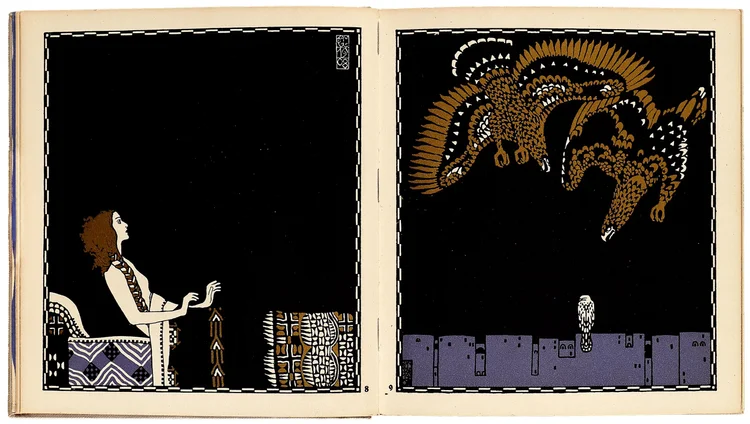
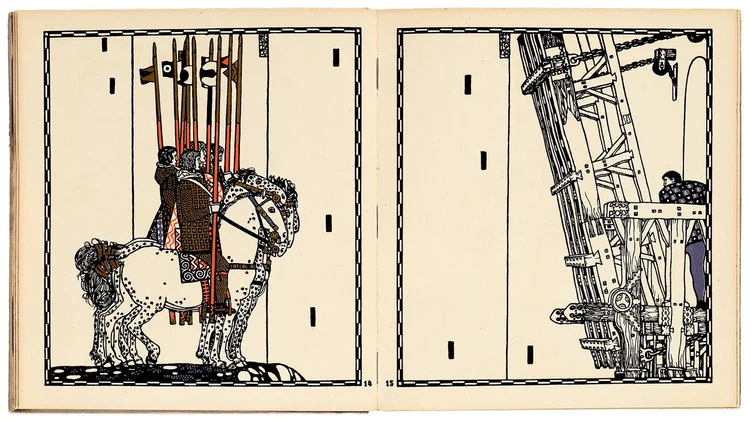
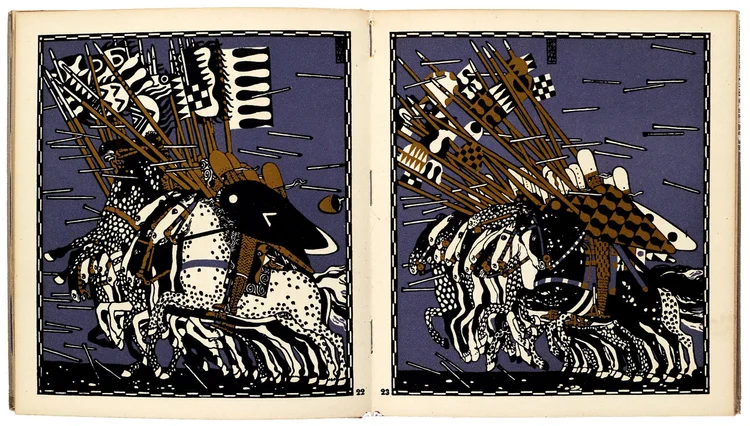
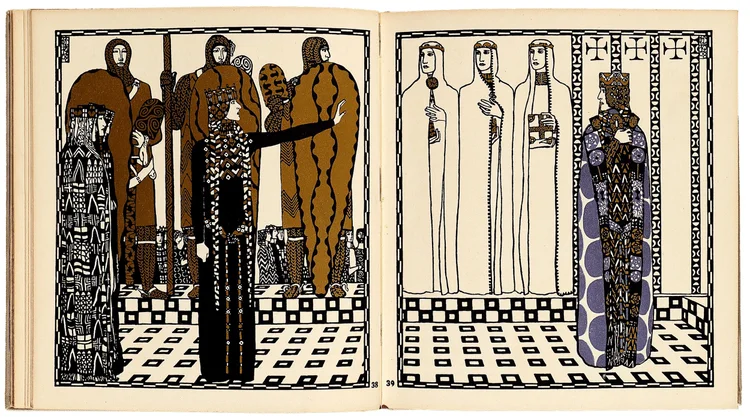
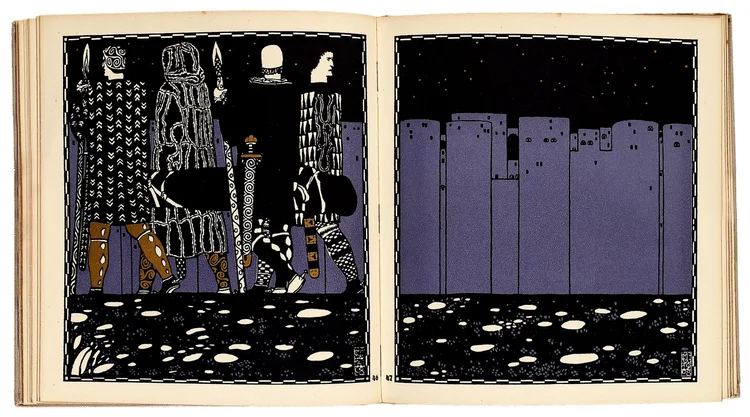
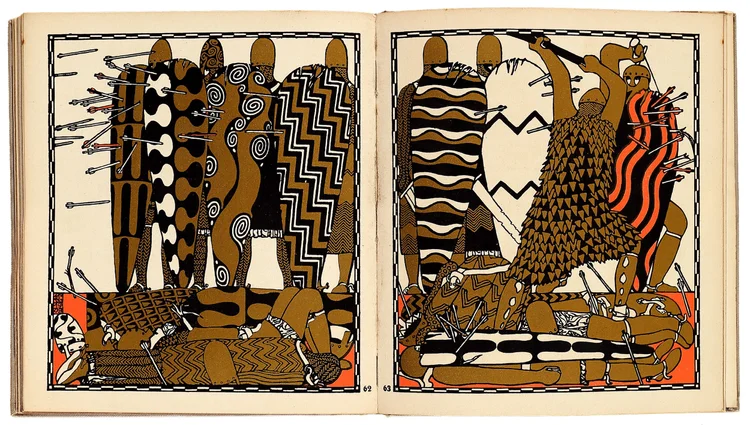
Carl Otto Czeschka (born Vienna, 1878–1960) was a member of the Vienna Secession and a designer for the Wiener Werkstätte. In 1908, the artist left Austria for Germany to teach at Hamburg’s Kunstgewerbeschule. The same year, he created his series of book illustrations for Franz Keim’s (1840–1918) abridged version of the Nibelung saga. Compiled around 1200 on the basis of an older group of Norse legends, this epic tale inspired Richard Wagner’s Der Ring des Nibelungen (The Ring of the Nibelung) (1848–1874) and played a significant role in establishing a sense of German national identity in the Nineteenth and Twentieth Centuries. Breaking from earlier treatments of the tale by artists such as Julius Schnorr von Carolsfeld, Henry Fuseli, and Wilhelm Kaulbach, Czeschka’s illustrations for Die Nibelungen are radically two-dimensional. They both respect and override the parameters of the two-page spread and allow abstract patterns of ornament to dominate the visual field. Writing in the Wiener Allgemeine Zeitung (February 6, 1909), Berta Zuckerkandl described Czeschka’s illustrations as “Equally precious, deep-colored and comparable only to kingly jewelry and glimmering incunabula in proud possession of the Habsburgs.” Each drawing, she continued, offered a “mighty, blooming epoch in surface decoration,” the “purest crystallization of the Wiener Schule.” This e-mail excepted from Alla Rosenfield’s forthcoming collection catalogue Vienna circa 1900: Graphic Works in the Merrill C. Berman Collection.
|