|
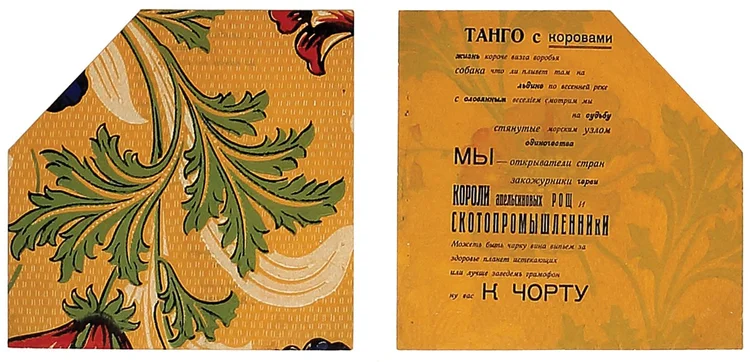
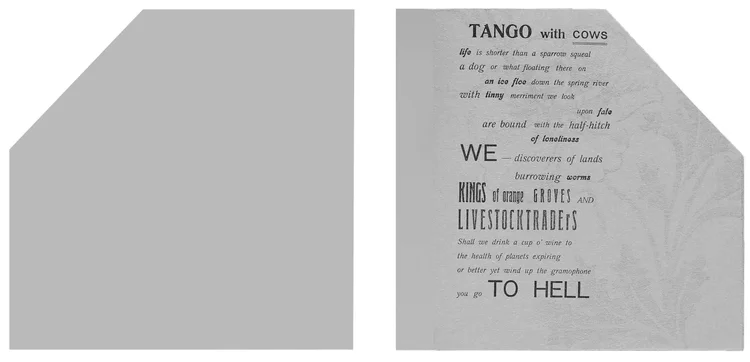
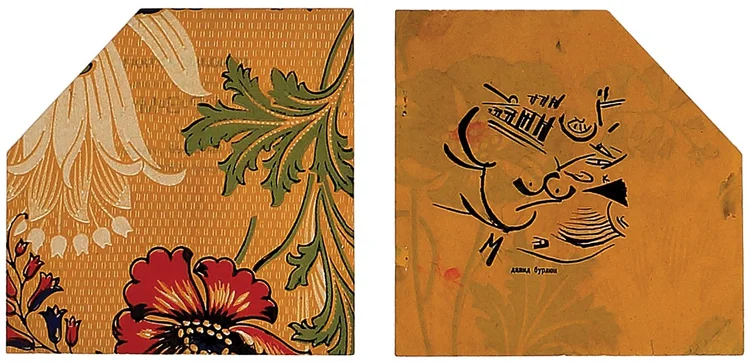
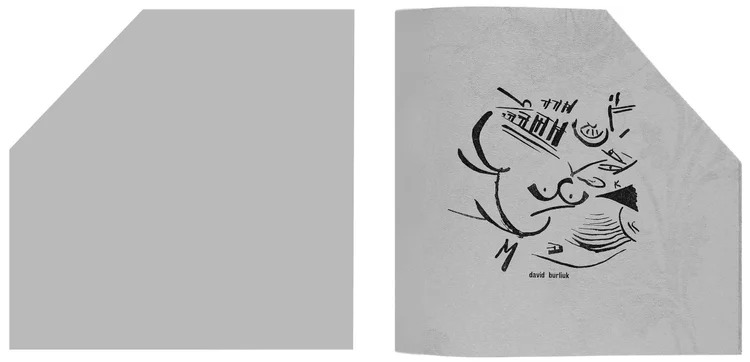
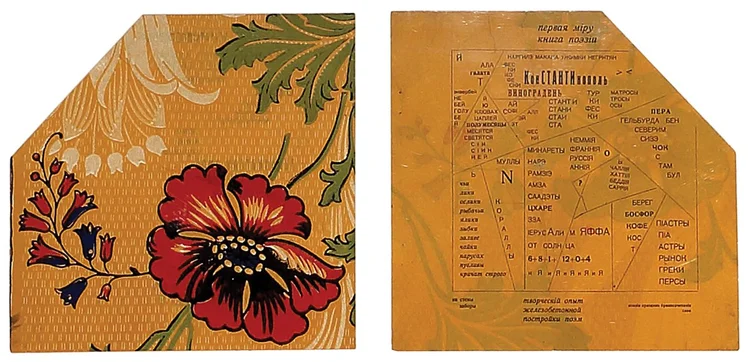
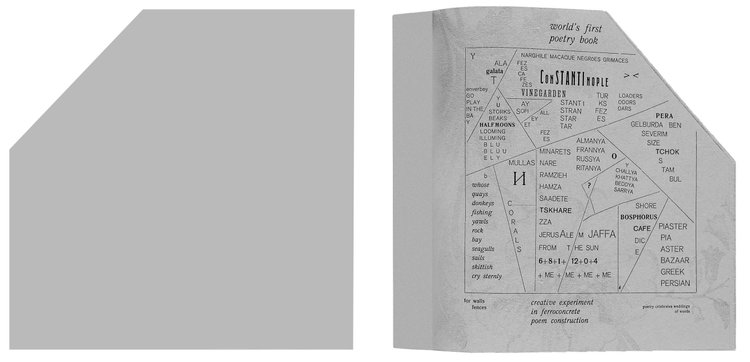
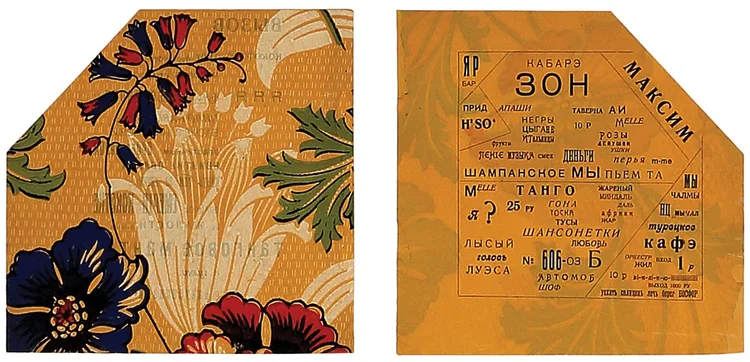
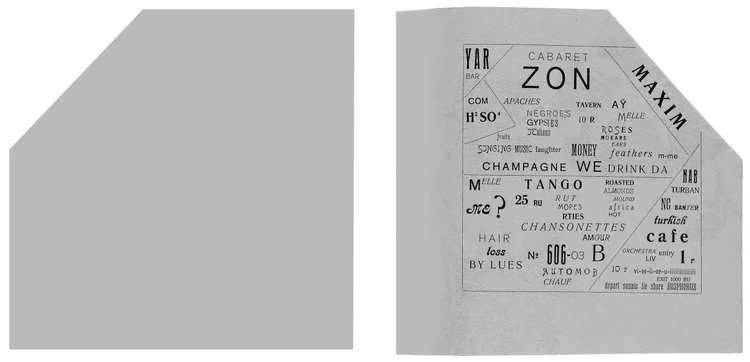
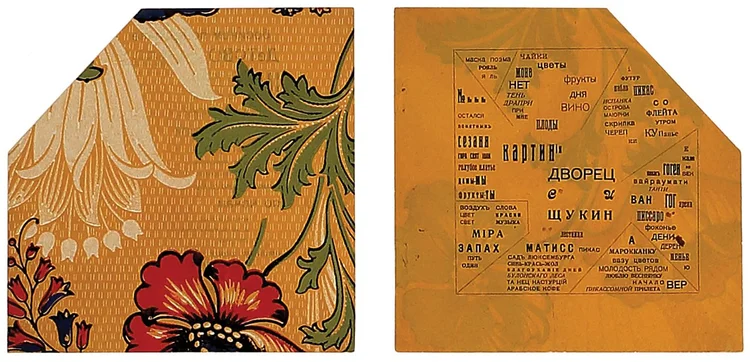
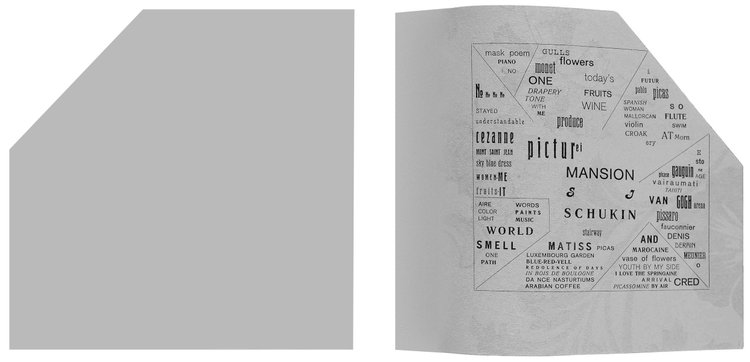
This thin, but significant volume of twelve poems printed on the blank sides of cheap, brightly colored, floral wallpaper, exemplifies the avant-garde’s interest in the generative interrelationship of form and content. Each of the poems is presented in multiple typefaces and sizes. The first six poems, including Tango with Cows (which lends the volume its name), follow a linear, sequential structure, while the remaining six are presented as clusters of words arranged within a square, divided by a crystalline network of fine diagonal lines. Constantinople, the first such clustered poem, includes a slogan below declaring it to be a “creative experiment in ferroconcrete poem construction.” In architecture, “ferroconcrete,” or reinforced concrete, allowed for the construction of unprecedented spatial volumes, such as was demonstrated in Bruno Taut’s Glass Pavilion at the 1914 Cologne Deutsche Werkbund exhibition. So too, according to Kamensky, might such a delicate, constructive armature liberate poetry. Just as objects depicted in Cubist works on view in Sergei Schukin’s modern art collection (represented in a poem below) were freed from the conventions of perspectival spatial organization, words mapped across the page were freed from linear sequential form. Our copy of Tango with Cows comprises ten of the original eighteen leaves. They were separated from one another and framed so that only five poems and one drawing are currently visible. These leaves are reproduced here in order of appearance in the book and paired with translations by Daniel Mellis and Eugene Ostashevsky from their impeccably researched 2022 facsimile edition. For more on Kamensky and three of his publications in the collection, click here.
|