|
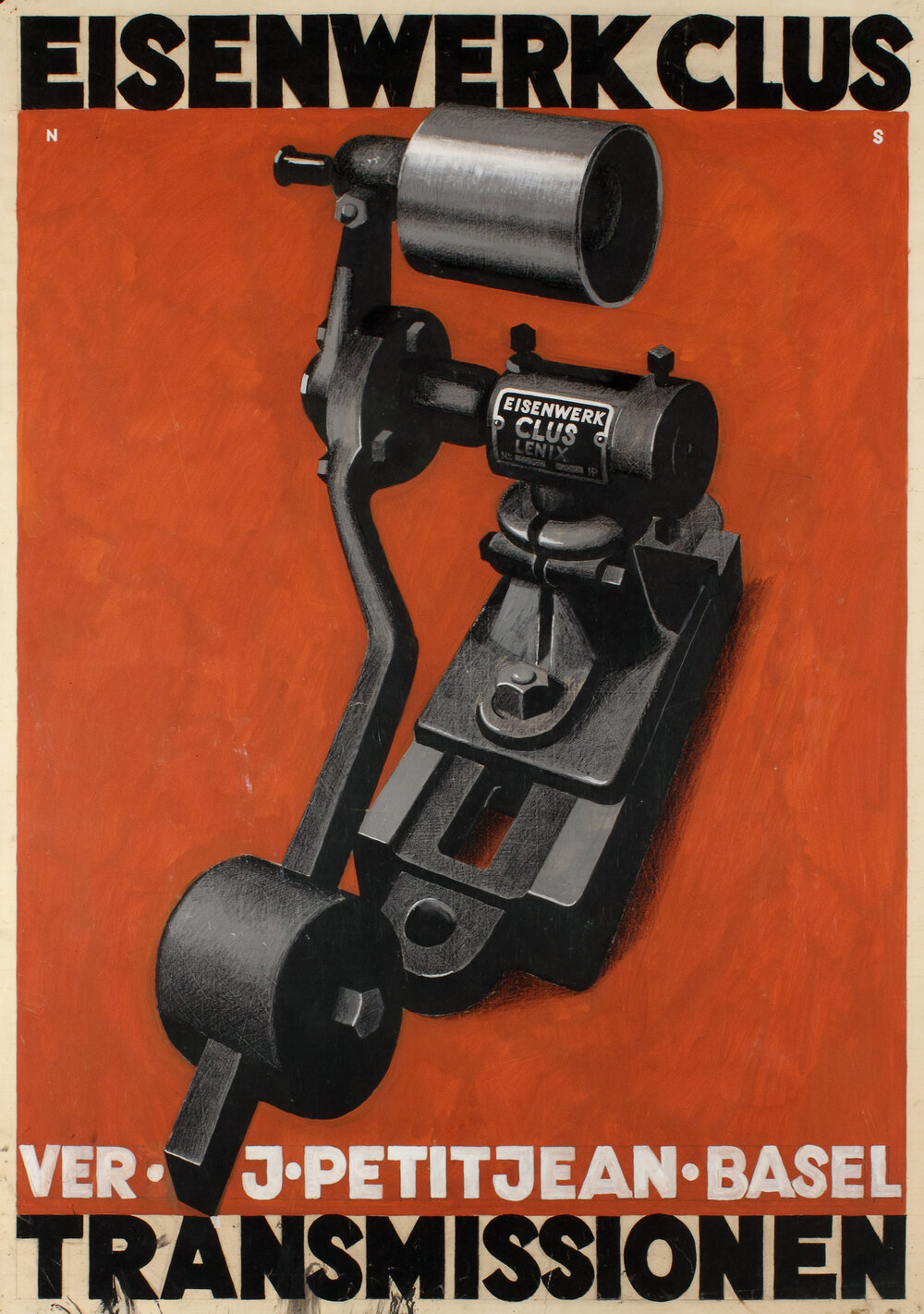
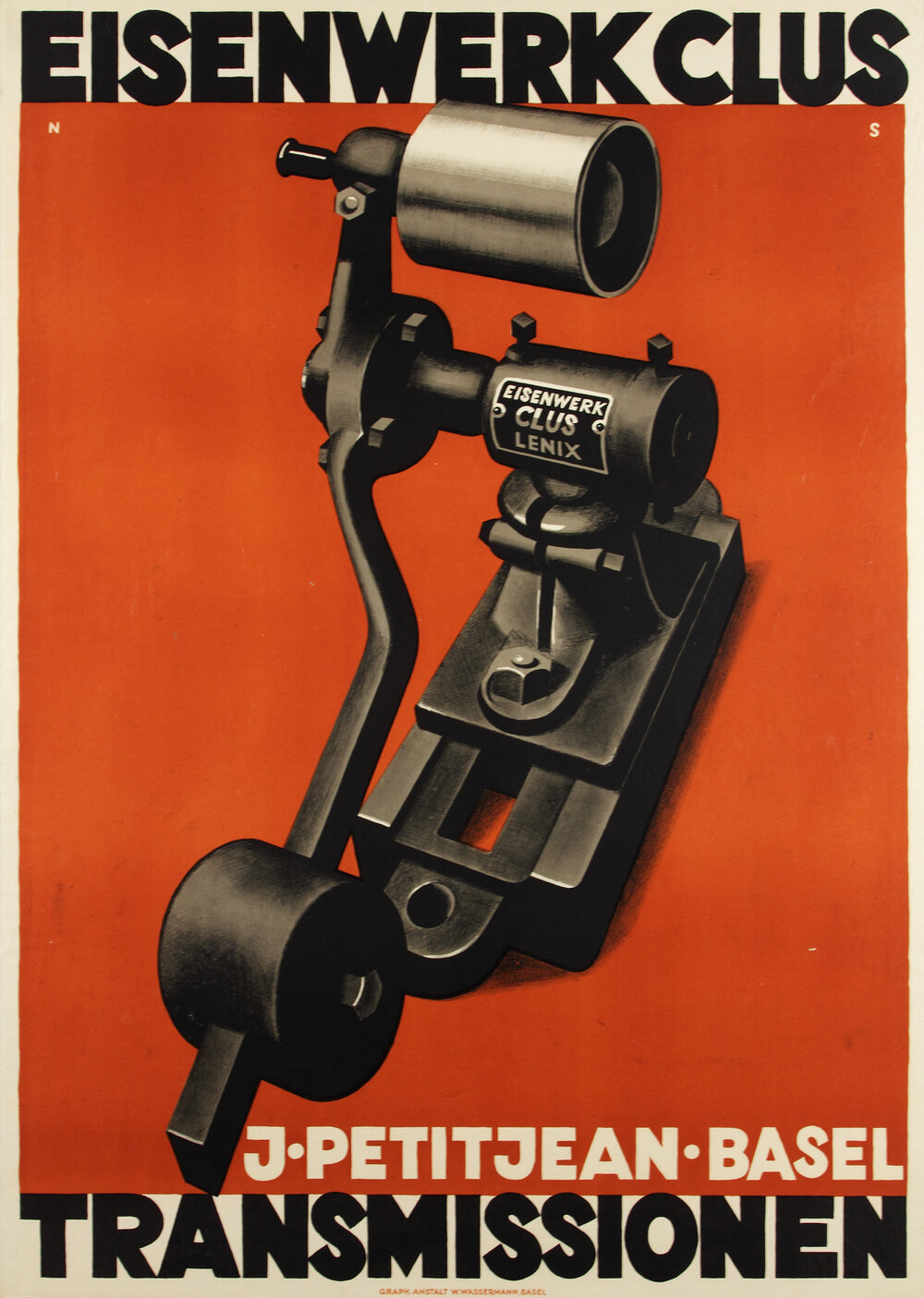
This week we focus on two works—a rare, full-sized gouache maquette for a poster and its printed realization—which distill and connect various key themes and works across my collection. Style. Niklaus Stoecklin’s Eisenwerk Clus (Clus Ironworks) is a late example of the Sachplakat (Object Poster), an austere advertising style developed in the 1910s that combined a company trademark with a single product image. As such, it points back to earlier works in the collection such as Lucian Bernhard’s iconic posters for Bosch sparkplugs, Adler typewriters, and Stiller shoes, or Hans Rudi Erdt’s advertisements for Opel cars and Manoli cigarettes. At the same time, this poster exemplifies the mid-1920s fascination with engineering and technology associated with the Neue Sachlichkeit (New Objectivity). Stoecklin’s clearly rendered railway track switch brings to mind, for example, Carl Grossberg’s precise images of machines and factories. Artist-designer. These commercial designs by an artist also active as a painter exemplify the dual activities of many artists of the period who produced both “fine” art and “commercial” work. Stoecklin participated in the inaugural exhibition of the Swiss avant-garde artists’ group Das Neue Leben (The New Life) in 1918, and six of his works were included in the landmark Neue Sachlichkeit exhibition in 1925. During the same years he designed posters—including this one—for Basel’s W. Wasserman graphics company. Process. I have long been interested in collecting related states in the printing process: from sketches and drawings to maquettes and printed matter. Many such sequences are found within my Russian holdings by artists including Gustav Klutsis, Valentina Kulagina, and Nikolai Sedelnikov; as well as in my holdings of work by American and European artists such as E. McKnight Kauffer, Lou Loeber, and Augustin Tschinkel. Such sequences shed light on the manner in which artists of the period worked in close dialogue with the technology of mechanical reproduction.
|