|
$$PLAIN_TEXT_PREVIEW$$
Hugo Gellert (American, born Hungary. 1892–1985)
|
|
“To me, life and art are inseparable. Being an artist and being a communist are one and the same. One is as important as the other.” —Hugo Gellert, early 1940s
|
|
Poster: The Communist Party, c. 1935
Lithograph, 37 15/16 x 25 3/8” (96.3 x 64.4 cm)
|
|
Today we feature the work of the artist and activist Hugo Gellert. Born Hugó Grünbaum in Budapest in 1892, he immigrated with his family to New York in 1906. After studying at the National Academy of Design, Gellert began work as a commercial lithographer and went on to work in a variety of areas, including not only graphic design but also painting, illustration, mural and set design. Two profound experiences catalyzed him to use his platform as an artist to oppose capitalism, racism, and fascism and to advocate for the working class: a trip to Europe in the summer of 1914, during the massive social and political discord that would erupt in the First World War; and the 1918 death of his brother Ernest, a conscientious objector whose death in a United States military prison was reported as a suicide but whom Gellert believed was murdered for his beliefs.
|
|
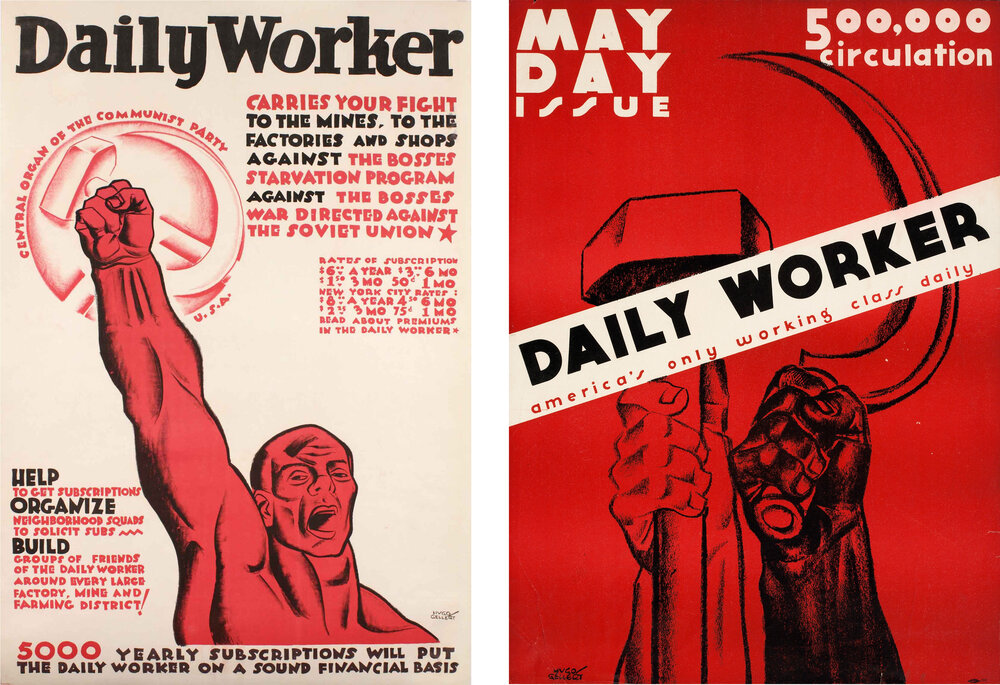
Left: Subscription poster for the newspaper Daily Worker, c. 1935
Lithograph, 38 1/8 x 25 1/4” (96.8 x 64.1 cm) Right: Poster highlighting the May Day issue of Daily Worker, c. 1935
Lithograph, 16 7/8 x 12” (42.8 x 30.4 cm)
|
|
While Gellert did not officially join the American Communist Party until 1934, he embraced communist views as early as 1919. He became deeply involved in the editorial content of many leading radical magazines and newspapers and contributed to Előre (a Hungarian-language socialist magazine published in the United States), The Masses, Daily Worker, Liberator, and New Masses (which he co-founded). His work responded to the contemporary Hungarian avant-garde, Russian Constructivism, American political satirists, and Mexican muralists.
|
|
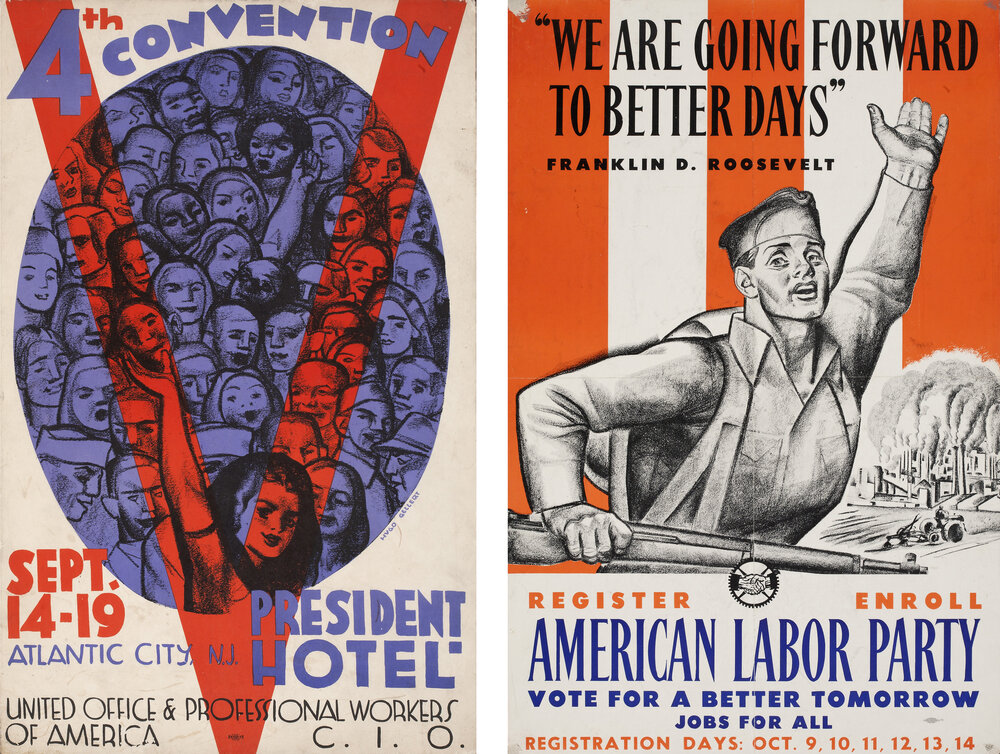
Left: Poster: 4th Convention of the United Office and Professional Workers of America, C.I.O., President Hotel, Atlantic City, NJ (September 14–19, [1941]), c. 1941
Silkscreen, 22 1/8 x 14” (56.1 x 35.5) Right: Poster: “We Are Going Forward to Better Days”—Franklin D. Roosevelt. Register and Enroll. American Labor Party, c. 1944
Lithograph, 21 7/8 x 14 1/4” (55.5 x 36.2 cm)
|
|
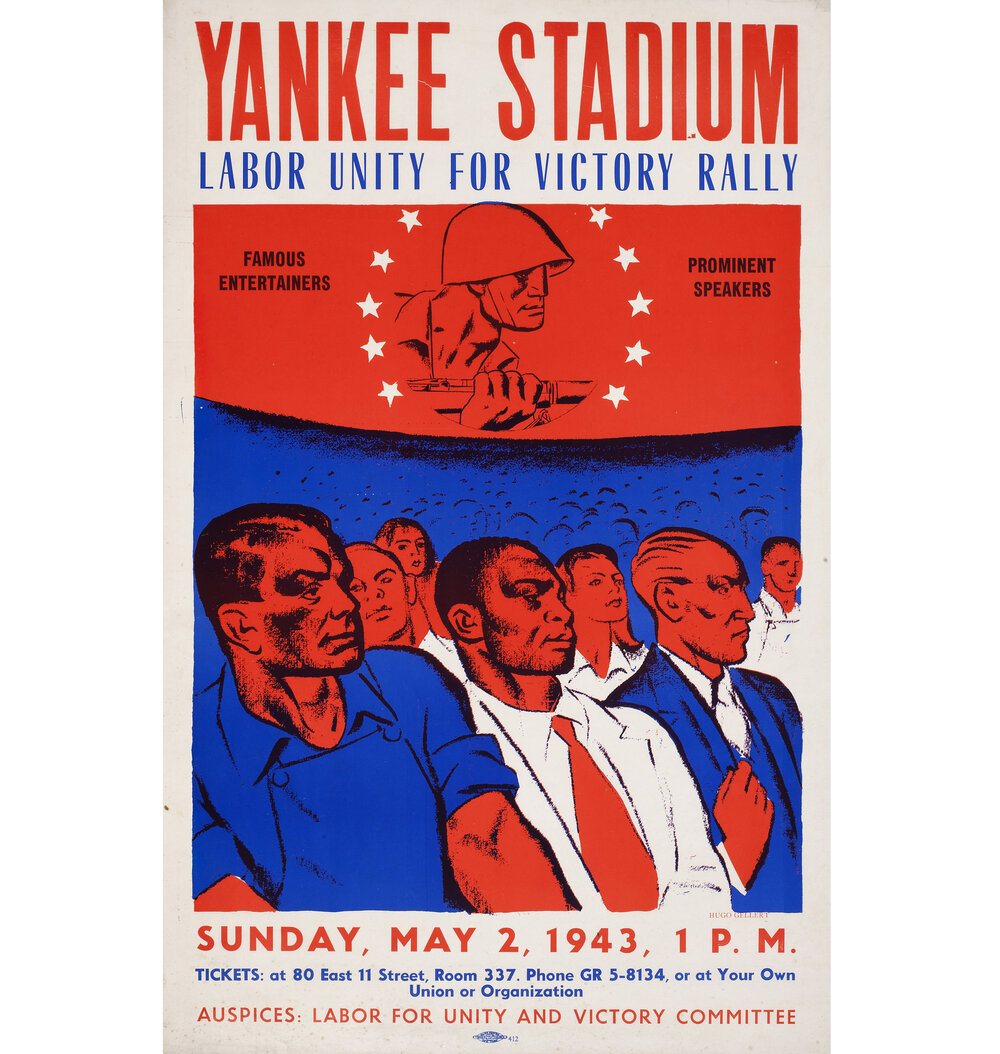
Poster: Labor Unity for Victory Rally, Yankee Stadium (May 2, 1943), 1943
Lithograph, 22 x 14” (55.8 x 35.5 cm)
|
|
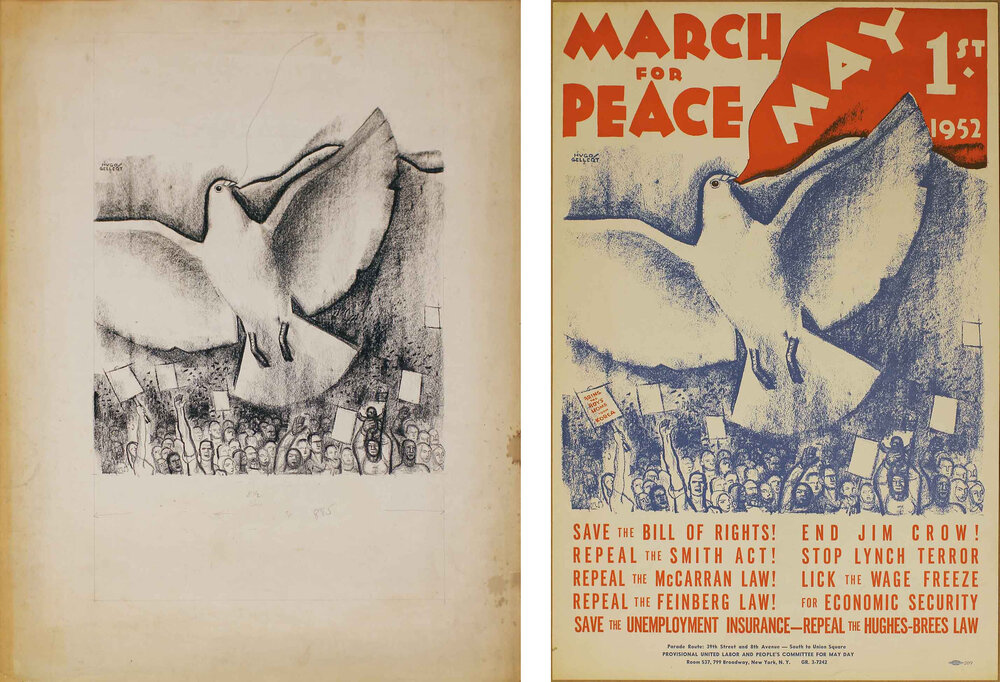
Left: Untitled (dove), c. 1952
Charcoal and pencil on paper, 29 x 23” (73.6 x 58.4 cm) Right: Poster: March for Peace (May 1st 1952), 1952
Lithograph, 22 x 14 1/4” (55.9 x 36.2 cm)
|
|
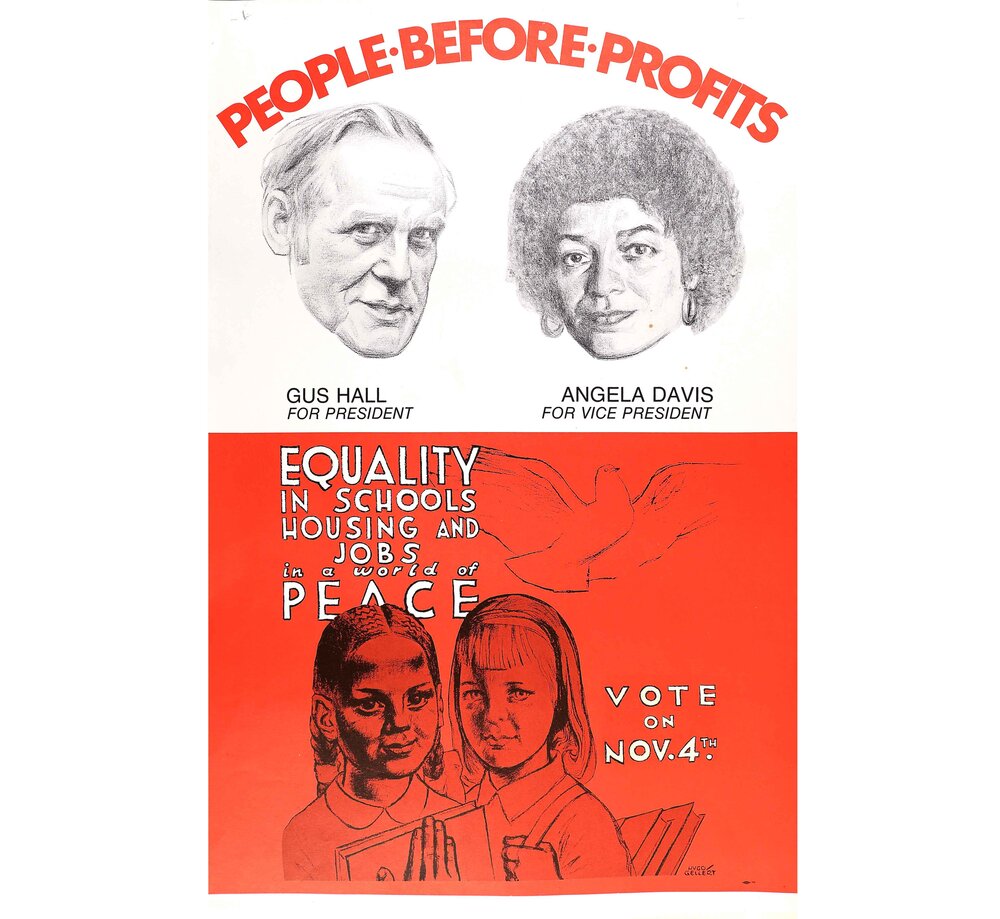
Poster for the presidential campaign of Communist Party USA
leader Gus Hall and his running mate Angela Davis,
featuring the slogan “People Before Profits,” 1980
Lithograph, 34 x 22” (86.4 x 55.9 cm)
|
|
In 1981, an interviewer remarked that some people dismiss political art as propaganda and asked Gellert, “Is it in your opinion propaganda?” Gellert replied, “I think that’s the best thing they could say of anything, because it fulfills a very important purpose, enlightening people. That’s the purpose [of art]. Is there anything finer than that?”
|
|
|
|
|