|
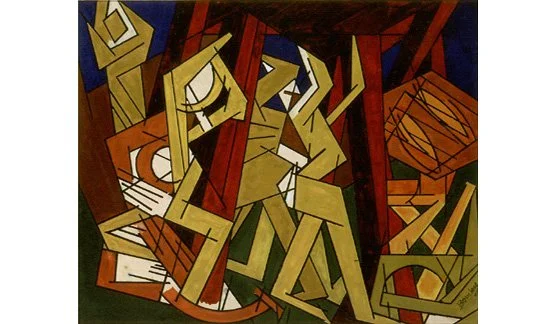
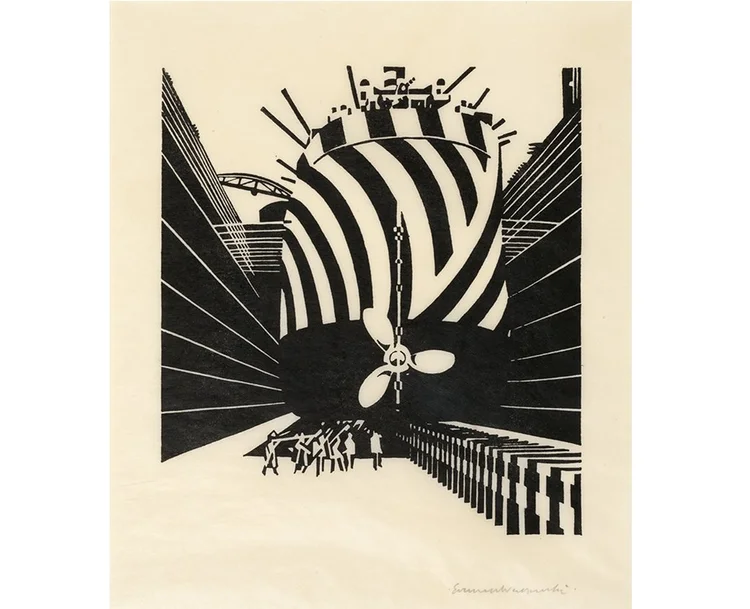
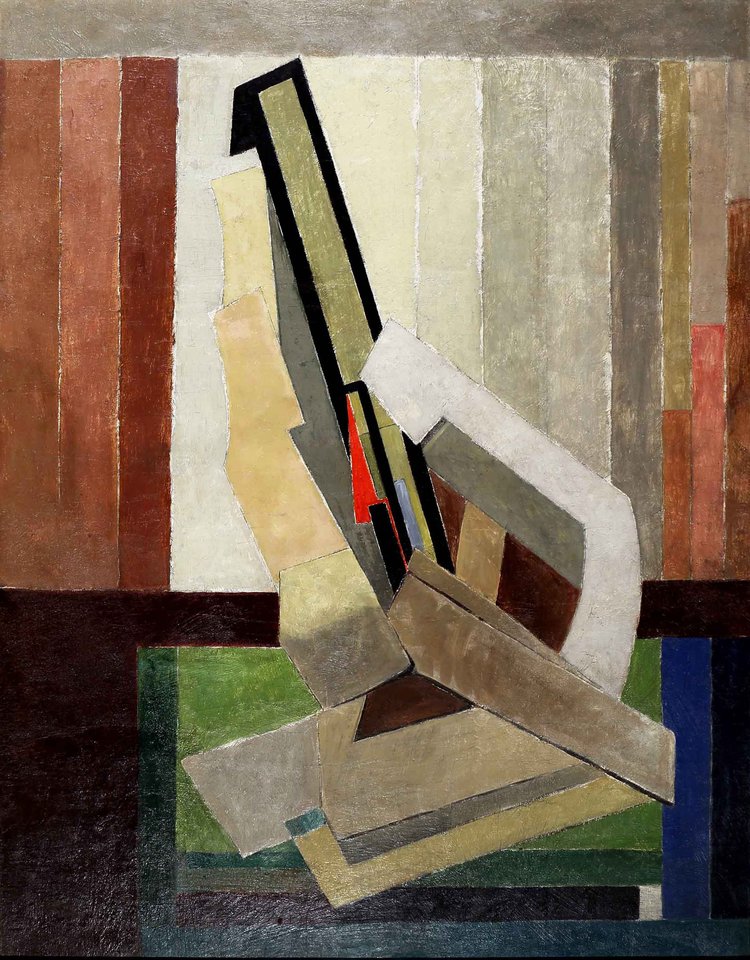
Excerpts from an unpublished interview on Vorticism with Merrill C. Berman (October 25, 2017): Adrian Sudhalter: The Vorticists, centered around Wyndham Lewis’s journal Blast (1914–1915), were among the earliest of the self-proclaimed European avant-garde groups. I wonder if you can tell me what drew you to them originally? Merrill C. Berman: I was drawn to the movement for various reasons. It was related to some degree to Futurism, at least in the case of Christopher Nevinson, who was more of a Futurist than a Vorticist. But it was also tied in with the history of the two world wars and the twentieth century turmoil that always captivated me. I had a gouache by David Bomberg related to his seminal Sappers at Work [see below; now deaccessioned] that depicts life in the trenches via abstract means. He was working for the Canadian government at that time. The art committee did not approve of his abstraction, so he ended up doing more realistic work. Similarly, Edward Wadsworth’s dazzle ships—such as Dry Docked for Scaling and Painting [see below; now deaccessioned]—also dealt with the First World War and were abstractions. So it definitely tied in my appreciation of Futurism and abstraction with World War I. The most phenomenal Vorticist pieces were in the Imperial War Museum, the Tate, and other museums, so I just did the best I could inch by inch over a twenty or thirty year period. There was this one Wyndham Lewis drawing I acquired that was a ticket to the British Museum, Reading Room [see above]. Lewis did some quintessential Vorticist drawings on it and signed it, so it was an incredible piece of ephemera.
|