|
$$PLAIN_TEXT_PREVIEW$$
Art Chantry (American, born 1954)
|
|
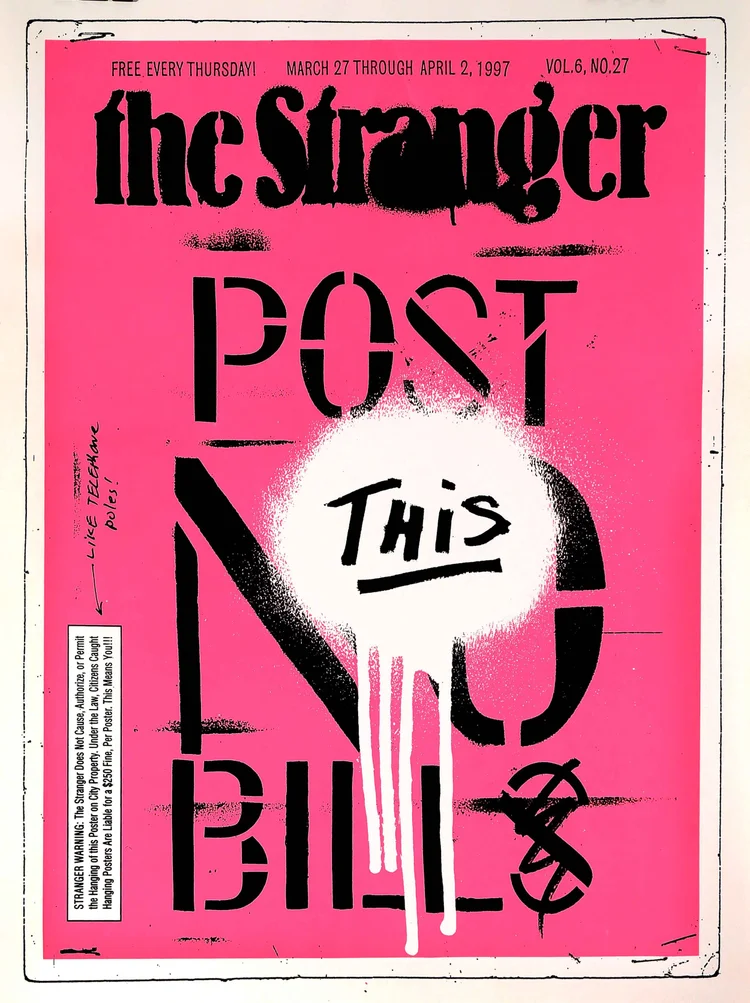
Cover of special issue of The Stranger (Seattle Washington; March 1997),
Post No Bills
Silkscreen, 25 1/4 x 18 7/8” (64.1 x 47.9 cm)
Note: Chantry designed the cover of this Seattle-based alternative weekly newspaper as a defiant response to a local poster ban. He encouraged the posting of this cover “on city property […] like telephone poles.”
|
|
A native of Seattle, Arthur Samuel Chantry II began designing posters and flyers in the 1970s for the local music and art cultural scenes. His aesthetic defined Seattle’s visual culture of the 1980s and 1990s through its “DIY” assemblage approach and the utilization of resources such as the photocopier, stencils, found materials (vintage ads, imagery drawn from industrial catalogs, for example), and paste-up lettering. Chantry, who is still based in Washington state, recognizes the cultural weight of his designs, which he calls “artifacts.” He cites Dada, early Surrealism, and American pop as influences. Chantry’s long-standing relationship with Seattle theater began with Bathhouse Theater in 1981. In 1983, he began his decade-long relationship with The Rocket, a Seattle-based free music magazine, and became art director the following year. His experience at The Rocket honed his talent for quick, experimental, and low budget designs. The Northwest “grunge” graphic look was pioneered by Chantry’s design work combined with the works of his friends and colleagues at the magazine. He worked with music labels such as Sub Pop and Estrus Records, designing logos, posters, and album covers, during the period when the grunge scene took off in the early 1990s with Nirvana’s Bleach and Nevermind (neither designed by Chantry). He continued to create posters
for local and other bands thereafter. Merrill visited Chantry’s studio in Seattle in the early 1990s and acquired material directly from the designer. The collection includes over 300 posters, a selection we share with you here.
|
|
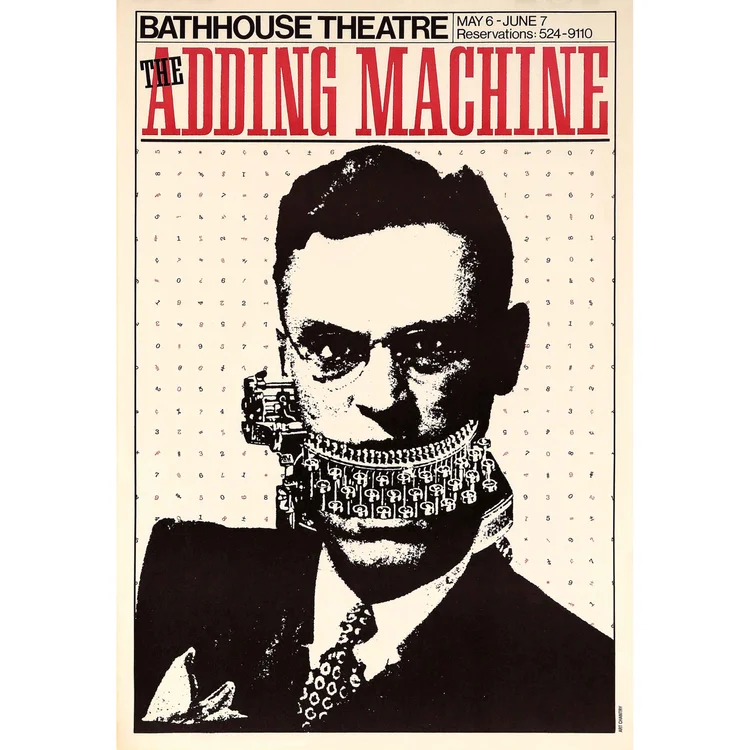
Bathhouse Theatre, Seattle
|
|
Flyer: The Adding Machine, Bathhouse Theatre, 1981
Lithograph, 17.75 x 12” (45 x 30.5 cm)
|
|
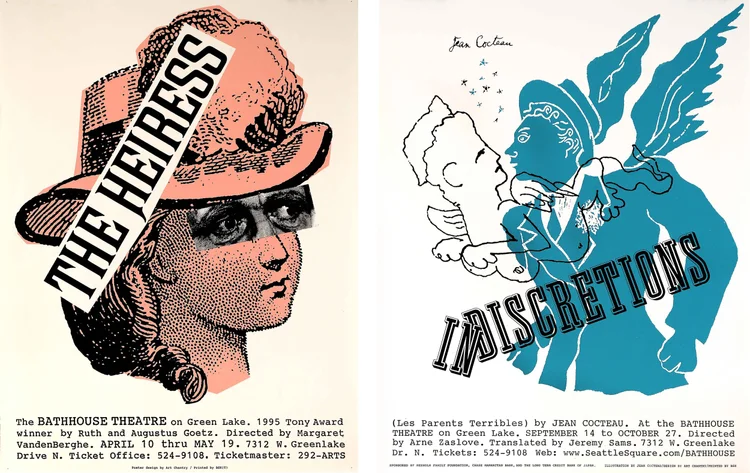
Left: Poster. The Heiress, Bathhouse Theatre, c. 1996
Silkscreen, 23 7/8 x 18” (60.7 x 45.8 cm)
Right: Illustration by Jean Cocteau, design by Art Chantry
Poster. Indiscretions (Les Parents Terribles) by Jean Cocteau,
Bathhouse Theatre, c. 1996
Silkscreen, 23.5 x 18.25” (60 x 46.25 cm)
|
|
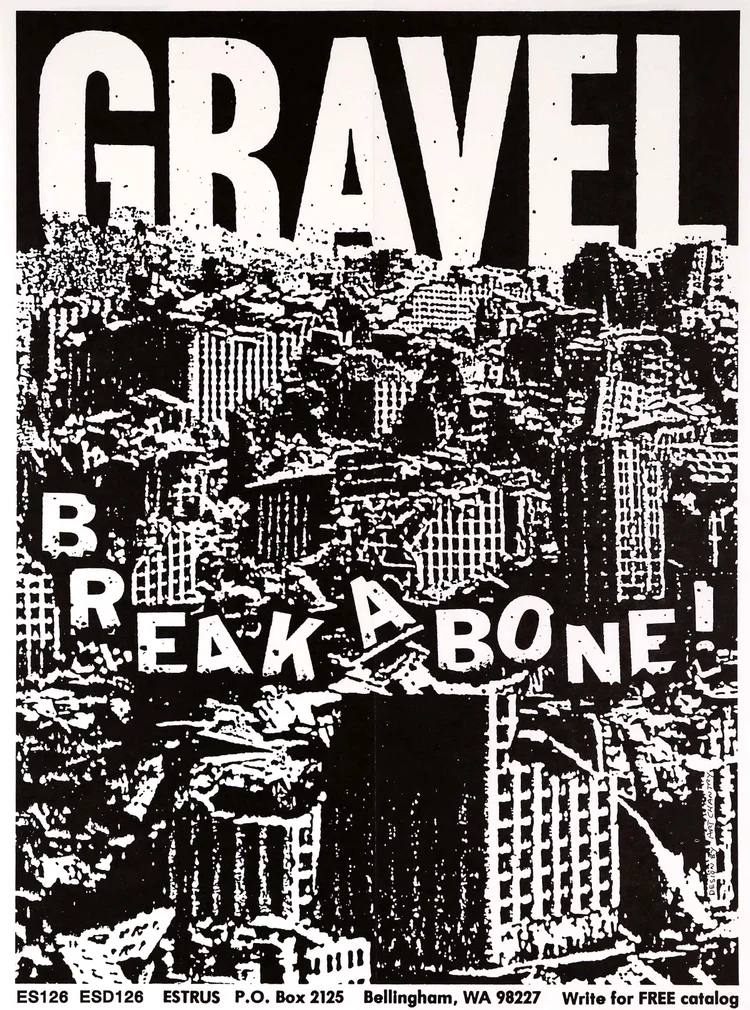
Poster: Gravel, Estrus Records, 1992
Lithograph, 20 1/4 x 15” (51.5 x 38.1 cm)
|
|
Poster: Pigeonhed, Sub Pop, c. 1994
Lithograph with bullet hole, 24 x 16” (61 x 40.6 cm)
Note: Detail at right picturing hole at center with Chantry’s explanatory note.
|
|
Poster: Pearl Jam, Fastbacks, The Zenith Paris, 1996
Silkscreen, 23 x 16 1/8” (58.5 x 41 cm)
|
|
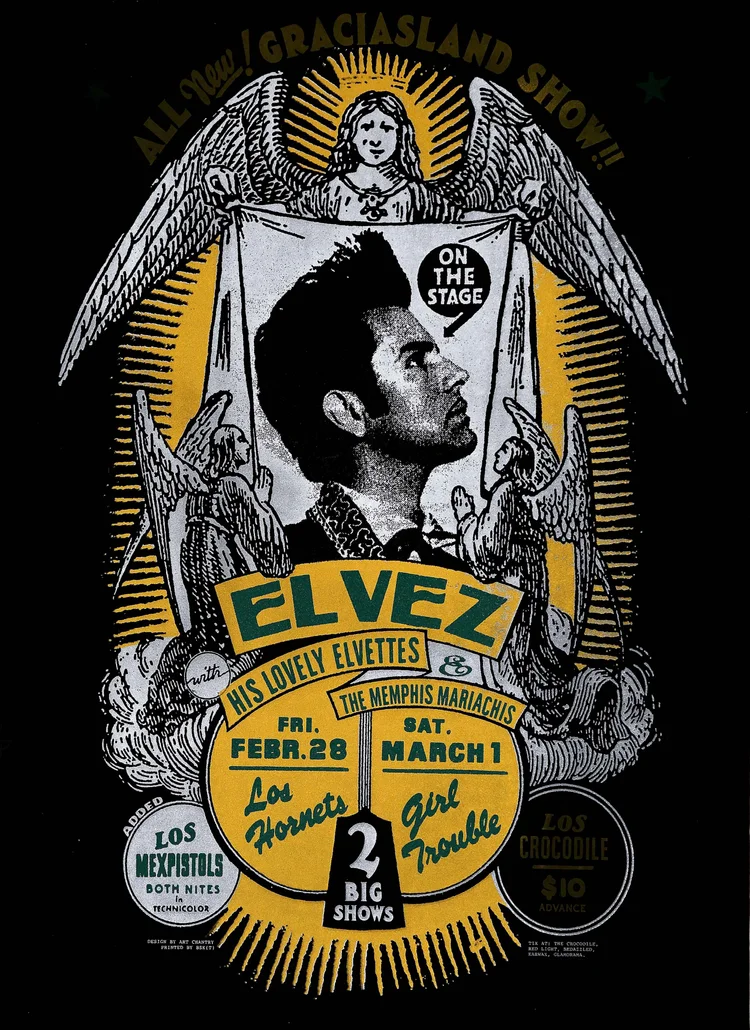
Poster: El Vez with his lovely Elvettes & The Memphis Mariachis, 1997
Silkscreen on black velveteen, 27 x 20” (68.5 x 50.8 cm)
|
|
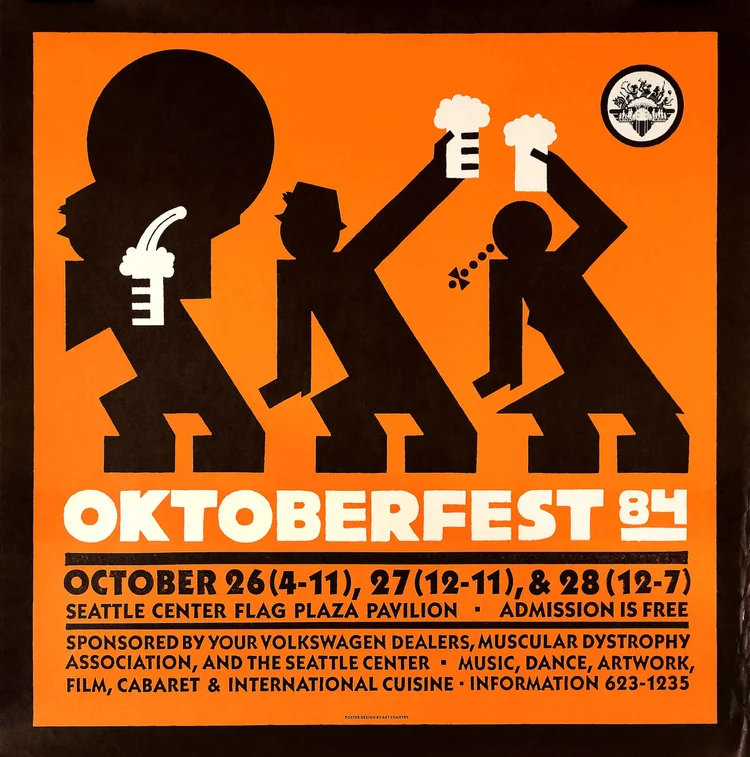
Poster: Oktoberfest 84, 1984
Silkscreen, 24.5 x 24” (62 x 62 cm)
|
|
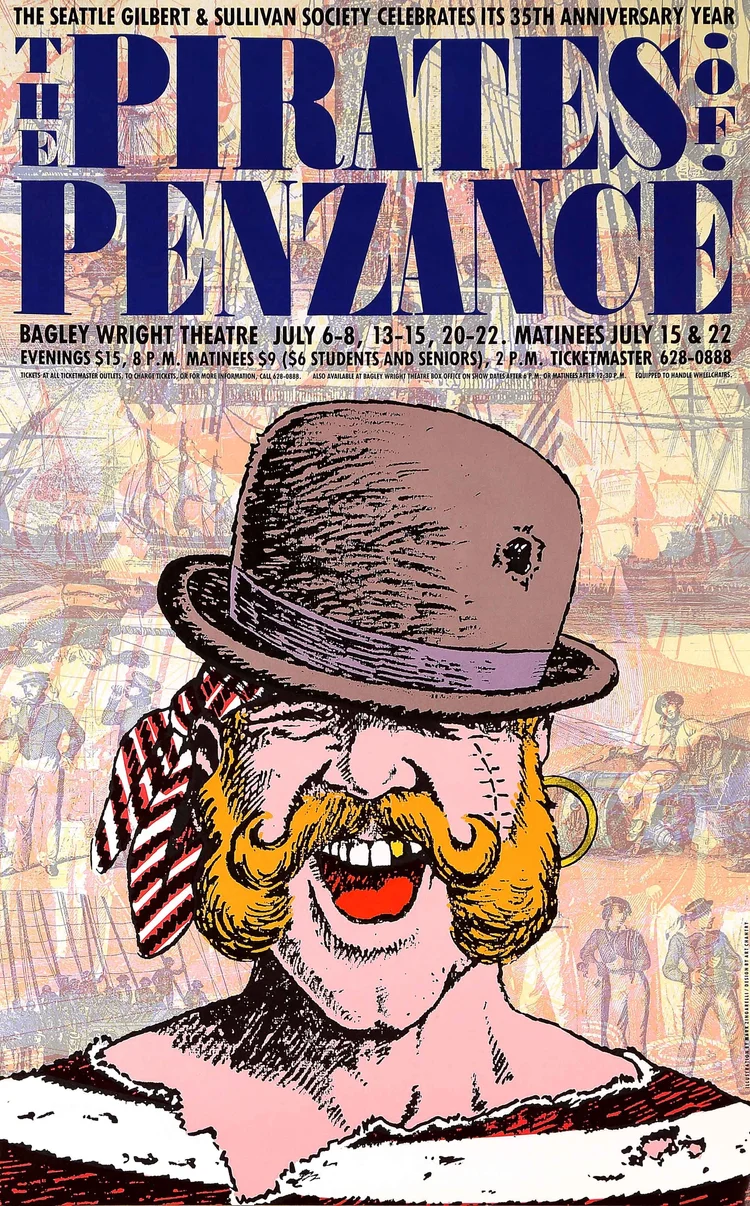
Illustration by Mark Zingarelli, design by Art Chantry
Poster: The Pirates of Penzance, The Seattle Gilbert & Sullivan Society, c. 1985
Silkscreen, 25 x 15.5” (63.5 x 39.5 cm)
|
|
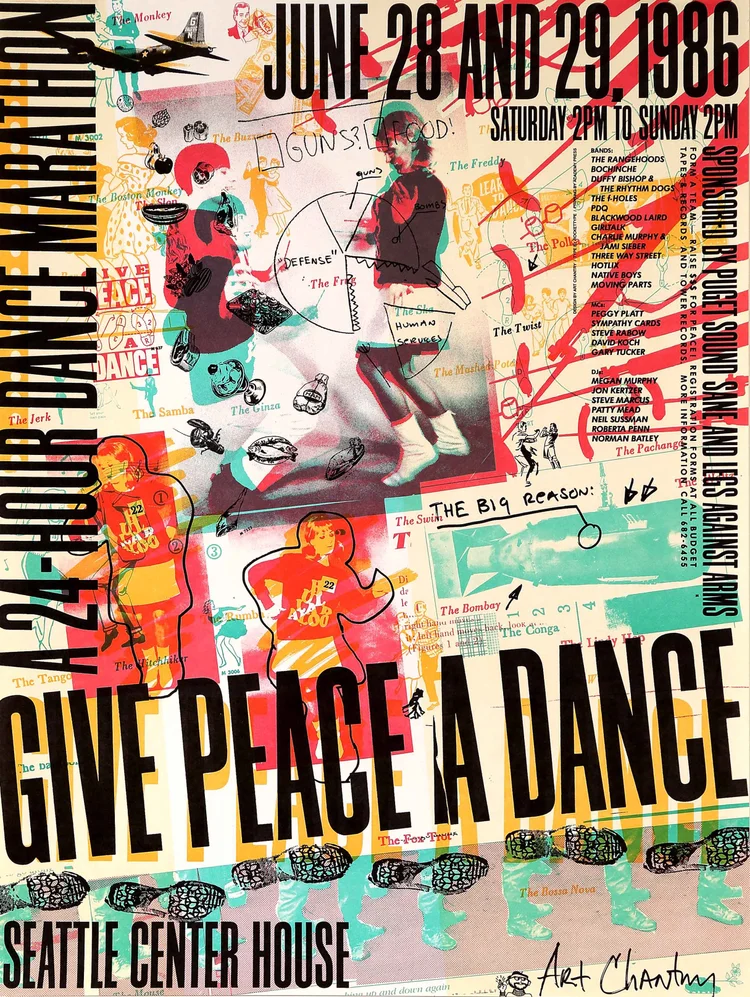
Poster: Give Peace a Dance, Legs Against Arms, 1986
Lithograph, 24 x 18” (61 x 46 cm)
|
|
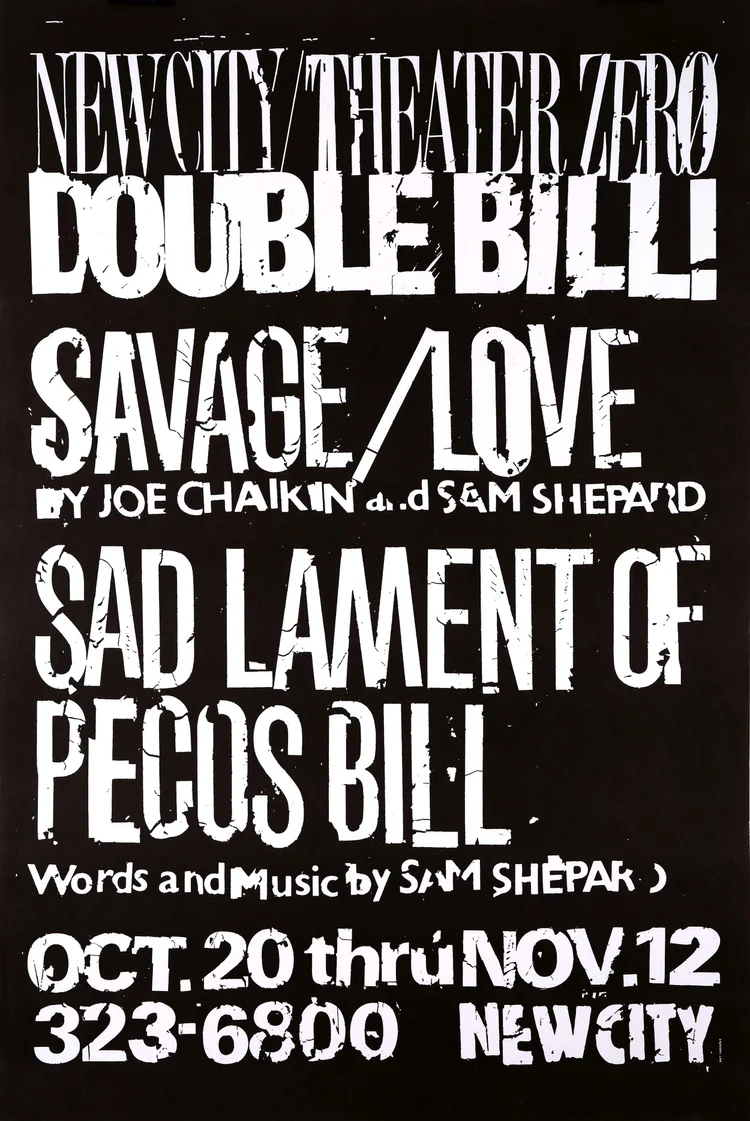
Poster: Sam Shepard Double Bill: Savage/Love & Sad Lament of Pecos Bill, New City Theater, 1993
Lithograph, 36 x 24” (91.5 x 61 cm)
|
|
Poster: Documents Northwest: The PONCHO Series
Art Chantry, Seattle Art Museum, 1993
Silkscreen, 32 x 24” (81 x 61 cm)
Note: The first museum exhibition of Art Chantry’s work, featuring 107 of his posters. Posters were simultaneously displayed as fine art mounted on gallery walls, while ephemeral posters were displayed in an installation which included scaffolding and a telephone pole to recreate the street-bound setting.
|
|
|
|