|
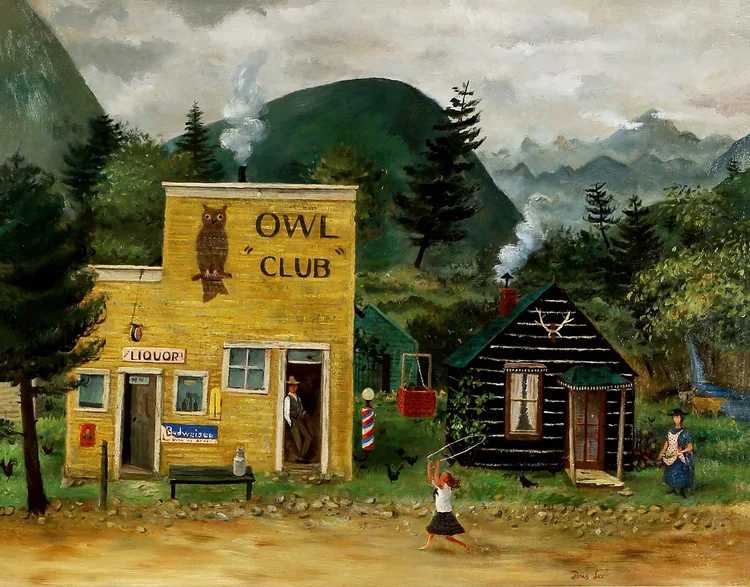
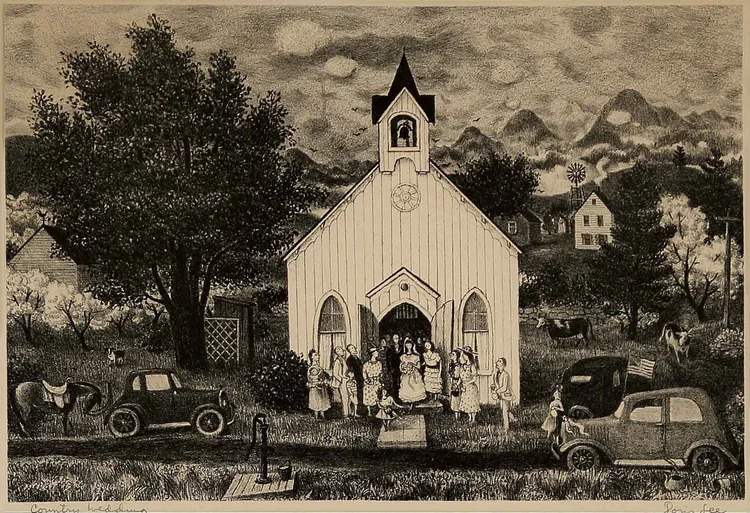
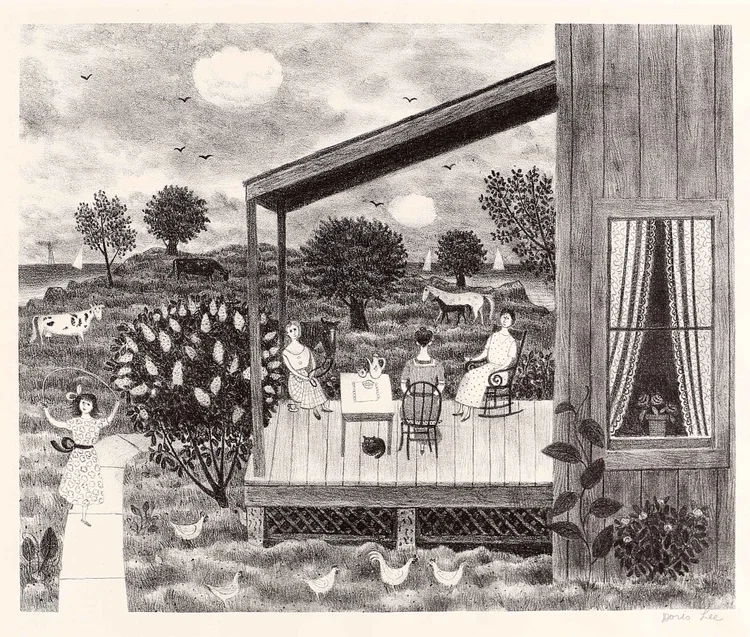
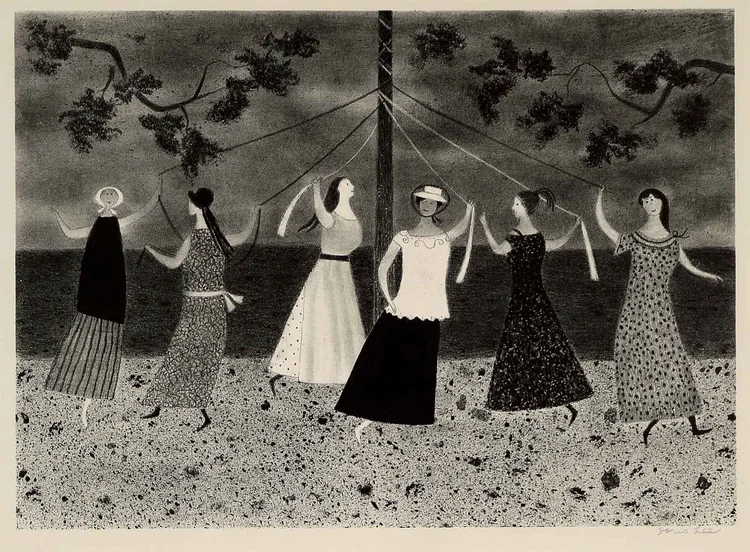
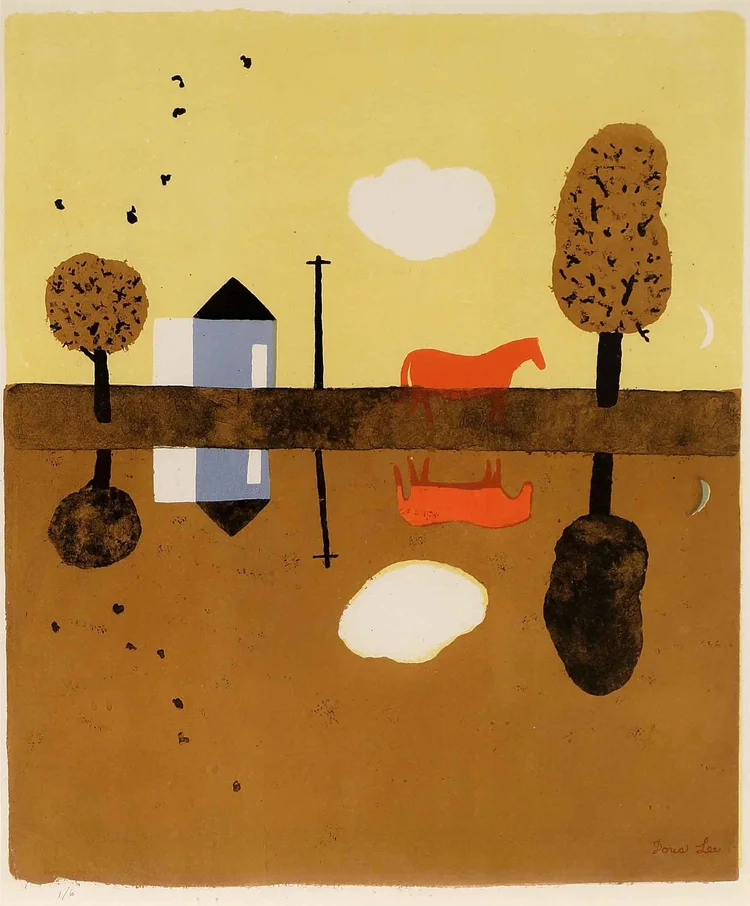
Despite appearances to the contrary, Doris Lee (née Emrick) was anything but a self-taught artist. After earning a BA in philosophy at Rockford College (now Rockford University) in her native Illinois, she traveled to Paris where she studied with the Cubist painter André Lhote. She continued her art education at the California School of Fine Arts, San Francisco. For Lee, simplicity, flatness, and other seemingly naïve approaches to representational painting were a chosen language, appropriate to capturing America in the 1930s and 1940s. She depicted whimsical rural scenes in frontal compositions calculated to convey a sense of American authenticity and unpretentiousness. In the mid-1930s, Lee received important New Deal and WPA-era government commissions, including murals for the Post Office Department headquarters in Washington, D.C. During this period, her works were also acquired by major American museums including the Rhode Island School of Design (1933), Art Institute of Chicago (1935), and Metropolitan Museum of Art (1937). In 1939, Holger Cahill included Lee’s painting Holiday (1939) in his sprawling exhibition American Art Today, organized in conjunction with the New York World’s Fair. Displayed alongside works by Philip Evergood, William Gropper, O. Louis Guglielmi, Jack Levine, and others, this exhibition cemented Lee’s status among American figurative painters of the period.
|