|
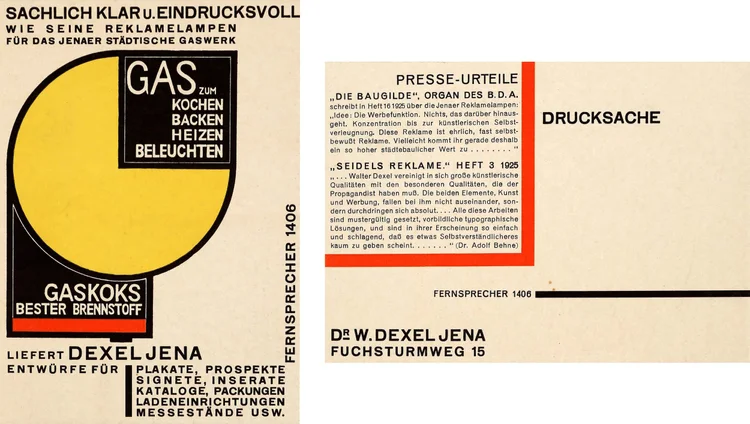
Adolf Behne (1885–1948) was a critic, theorist, and advocate of modern art and architecture in Germany between the wars. Among architectural historians, he is best remembered for co-organizing the Exhibition of Unknown Architects in 1919 and for his book The Modern Functional Building (1926). But Behne also wrote prolifically on art for a broad array of newspapers and journals including Der Sturm, De Stijl, Ma, Het Overizicht, and Das neue Frankfurt. Notably, he reviewed the Dada-Messe in Die Freiheit (July 9, 1920) and the First Russian Art Exhibition in Die Weltbühne (November 23, 1922) and contributed essays to exhibition catalogues including Issachar Ber Ryback (1923) and First All-German Art Exhibition (1924)—the latter two shown below. The breadth of Behne’s writings is so broad that it can be hard to assess the full scope of his contribution to what scholar Kai Gutschow has called Weimar Germany’s “culture of criticism.” Behne belonged to a coterie of academically trained thinkers, who, upon earning their Ph.D.’s, turned their attention to contemporary culture rather than to the art and architecture of the past. Behne, whose doctoral dissertation concerned late Medieval architecture (1912; advisor Adolph Goldschmidt), traveled to Soviet Russia in 1923 and became an advocate for Constructivism in Germany. His commitment to abstraction aligned with that of his friend, Walter Dexel, the artist and director of the Jena Kunstverein, whose own doctoral dissertation concerned Medieval illuminated manuscripts (1916: advisor Botho Graef). Behne’s published books included Zur neuen Kunst (1915), Wiederkehr der Kunst (1919), Das politische Plakat (1919), Die Ueberfahrt am Schreckenstein (1924), Von Kunst zur Gestaltung (1925; see below), Heinrich Zille (1925), Sammlung Gabrielson (1925), Neues Wohnen, Neues Bauen (1927), and Eine Stunde Architektur (1928). In the mid-1920s, three books by Behne were announced as forthcoming in the Bauhausbücher series, but never appeared: Plastik der Gestaltung (no. 19, with Max Burchartz), Russland (no. 21), and Kunst, Handwerk und Industrie (no number).
|